
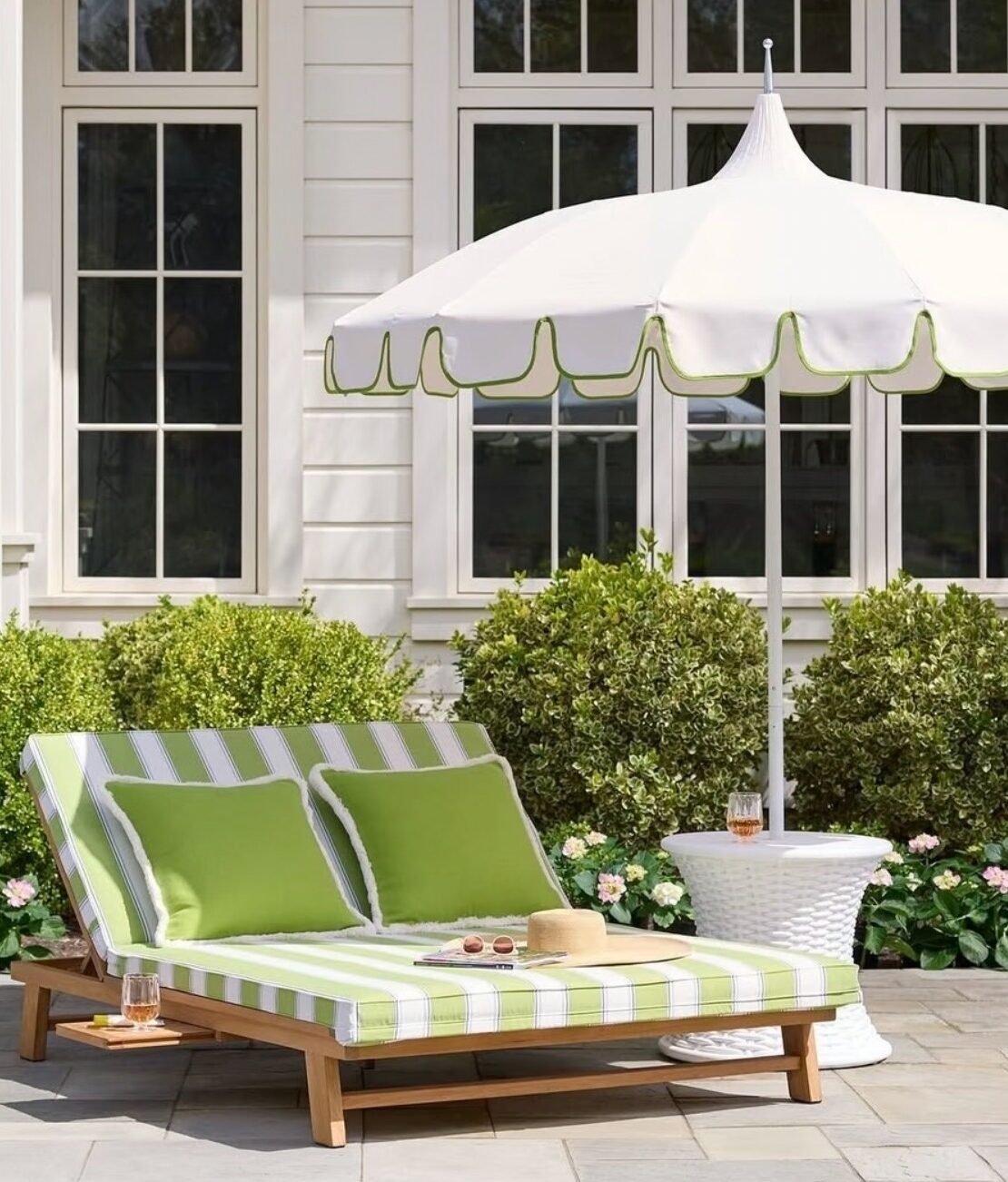
Why Outdoor Furniture Is One of the Harder FF&E Categories to Get Right
Outdoor and pool furniture takes more punishment than almost anything else in a resort. It sits in direct sun for twelve or more hours a day. It faces salt air, chlorine splash, tropical downpours, and the daily wear of guests dragging it across stone terraces. When a piece fails — a frame corroding through its powder coat, a fabric bleaching out inside a single season — it is visible to every guest on the pool deck, and replacing it mid-season is an operational headache.
China is the dominant global source for commercial outdoor furniture, and for good reason: the manufacturing base in Guangdong, Zhejiang and Fujian provinces covers every material type, most factories understand hospitality volume and durability requirements, and the price-to-quality ratio is hard to match anywhere else. But the gap between a factory that understands resort requirements and one that is simply filling a purchase order can be significant, and not all of that shows up in a product catalogue.
This post covers the practical points that matter most when you are sourcing outdoor and pool furniture for a resort project — the materials, the product categories, what to watch for in a supplier, and where the common mistakes happen.
Hotel Public Area FF&E Furniture: The Complete Sourcing Guide for Hotel and Resort Projects
Material Selection: What Works in Coastal and Tropical Environments
The right material depends on where the property is. A mountain lodge in the Alps has different priorities than a beachfront resort in Barbados. For the Caribbean, Indian Ocean, and the Algarve — the markets this firm works in — salt air, UV intensity and humidity are the constant pressures. Here is how the main materials perform.
Powder-Coated Aluminium
Aluminium is now the dominant frame material for commercial resort seating, and for most pool deck applications it is the right choice. It does not rust. It is light enough for staff to stack and move, which matters enormously on decks that get reconfigured for events. And it ships efficiently — stackable frames mean more units per container, which reduces freight cost.
The word “aluminium” covers a wide range of quality. At the commercial hospitality level, what you are looking for is 6061-T6 or 6063-T5 alloy for structural components, wall thickness of 1.5 mm or above on the main frame members, and a powder-coat finish that has been applied at a minimum of 60–80 microns dry film thickness. For beachfront and island properties, marine-grade powder coating is worth specifying: it uses a primer coat underneath the finish coat, which makes a significant difference in salt-air longevity.
The failure mode to watch for is not the aluminium itself — it is the finish. A cheap powder coat chips, the aluminium oxidises underneath, and within two or three seasons you have white pitting through what looked like a reasonable frame. Ask your factory for a cross-cut adhesion test result and a 500-hour salt spray test certificate to ASTM B117 before you sign off on a production sample.
Teak and Hardwood
Grade-A teak has natural oils and silica that make it highly resistant to moisture, decay and insects. Left untreated, it weathers to a silver-grey patina that some resort aesthetics lean into; maintained with annual oiling or a teak sealer, it holds its warm honey colour for a decade or more.
The practical considerations for procurement are cost, maintenance and provenance. Teak is significantly more expensive than aluminium — typically two to four times the frame cost for equivalent pieces. It requires genuine staff commitment to maintenance; a property that oils its teak faithfully will get excellent longevity, but a property that leaves it to weather and patch-treats will find it looking shabby within a few seasons. And sustainable sourcing matters: FSC certification has become a standard requirement for European and many Caribbean resort developers, and you should verify that your factory can supply the full chain-of-custody documentation.
For high-end properties where the aesthetic justifies the cost and the operations team has the capacity to maintain it, teak furniture remains a compelling choice, particularly for statement pieces — daybeds, lounge chairs on a private terrace, dining sets at a beach club. For high-volume pool decks where turnover and storage are operational priorities, aluminium is usually the better answer.
Synthetic Rattan (PE Rattan / HDPE Weave)
The best synthetic rattan available today bears very little resemblance to the cheap wicker knockoffs of a decade ago. High-density polyethylene (HDPE) or UV-stabilised polyethylene (PE) strand woven over a powder-coated aluminium frame is now the standard for commercial hospitality outdoor furniture, and Chinese manufacturers in Zhejiang and Guangdong have refined this category considerably.
What to specify: PE strand density of at least 1.8–2.0 mm diameter, UV inhibitors added during extrusion (not applied as a surface treatment), and weave pattern that is tight and even — loose weave traps debris and shows wear faster. The aluminium sub-frame matters as much as the rattan itself; check the frame gauge as you would for any aluminium piece.
Synthetic rattan is well suited to covered terraces, bar areas, lobby extensions and beach club dining. It offers more design flexibility than aluminium profile furniture and reads as warmer and more relaxed in photography. It is not ideal for the pool deck itself, where it will be in direct chlorine splash and near-constant wet use — for those positions, aluminium with Textilene or sling fabric performs better.
Textilene and Sling Fabrics
For sun loungers and pool chairs, the seat surface matters as much as the frame. Textilene — a PVC-coated polyester mesh — has become the industry standard for pool deck seating. It dries in minutes, does not absorb chlorine or sunscreen, resists mildew, and is easy to hose clean. Tensioned correctly across an aluminium frame, it also ventilates well, which guests appreciate in direct sun.
For cushioned pieces on terraces and beach clubs, solution-dyed acrylic fabric — the category that includes Sunbrella and its equivalents — holds colour far better than polyester alternatives because the pigment runs through the entire fibre rather than being printed on the surface. A printed polyester cushion cover may look fine in a sample room but can fade visibly within a single peak season in the Caribbean or the Indian Ocean.
Quick-dry foam matters for cushion cores. Standard open-cell foam absorbs and holds water; reticulated foam has an open-cell structure that allows water to drain through quickly and the cushion to dry within hours rather than days. For pool-side cushioned furniture this is not optional — a property that is replacing mouldy cushion cores every year is paying a maintenance cost that could have been avoided at specification stage.
The Main Product Categories for a Resort Outdoor FF&E Package
A typical resort outdoor FF&E programme covers several distinct categories. Understanding what each one requires at specification stage saves a lot of back-and-forth with factories.
| Category | Typical Specification Points | Common Mistakes |
| Sun loungers (pool deck) | Aluminium frame 1.5 mm+, Textilene or reticulated cushion, 5-position adjustable back, 150 kg capacity minimum, stackable | Ordering without testing stackability; specifying flat cushions that pool water underneath |
| Daybeds (premium pool / beach) | Oversized frame (200 × 90 cm+), canopy option, marine-grade powder coat, quick-dry cushion system | Underspecifying frame weight for wind resistance on exposed decks |
| Dining chairs (outdoor restaurant) | Contract-grade aluminium or teak, UV-resistant cushion or sling, 4-leg or sled base for stability on stone | Specifying domestic-grade chairs that tip on uneven paving |
| Bar stools | Swivel or fixed, footrest, slip-resistant feet, same frame material as dining chairs for visual cohesion | Ordering bar stools and dining chairs from different factories — finish mismatch is common |
| Umbrellas / parasols | Minimum 3 m diameter for sun coverage, aluminium or fibreglass ribs, marine-grade pole finish, weighted base | Underspecifying base weight; parasols blown over are a guest safety issue |
| Cabanas and daybed structures | Tensioned fabric canopy or hard-top, structural aluminium frame, requires structural load calcs for windy sites | Treating as furniture rather than a structural element; no engineer sign-off |
| Planters and accessories | GRP or powder-coated aluminium, UV-stable colour, drainage holes, weight appropriate for rooftop use | Heavy concrete planters specified for upper-floor terraces without load checking |
| Volume and lead time planning
Resort outdoor furniture orders typically run from 150 to 500+ pieces across all categories. Chinese factories producing at this scale generally require 25–45 days production time for standard items, plus ocean freight (18–28 days to the Caribbean, 20–35 days to European resort markets). Order confirmation 4–5 months before the property opening date is a reasonable planning horizon for a full package. |
What to Look for in a Chinese Outdoor Furniture Factory
Not all outdoor furniture factories are the same, and the differences that matter most are not always the ones that show up in a product catalogue. Here is what experienced sourcing teams look for.
Manufacturing focus and category depth
China has hundreds of outdoor furniture factories, but most of them specialise in a subset of the market — some focus on aluminium frame furniture, some on PE rattan weave, some on teak or hardwood, and some on parasols and shade structures. A factory that claims to do everything competently is worth scrutinising: the machinery, skills and quality control processes for precision aluminium welding are quite different from those for tight PE rattan weave or structural teak joinery.
For a resort package that spans multiple categories, using a single factory is tempting from a logistics perspective, but it often means accepting lower quality in the categories outside that factory’s core competency. A good sourcing agent will split the package across two or three factories based on category strength rather than forcing a single-source arrangement.
Welding and frame construction quality
Frame quality is the single most important determinant of longevity for aluminium outdoor furniture, and it is not visible in a product photo. What you are looking for in a factory visit or audit: fully automated TIG welding rather than hand MIG welding for structural joints; weld seam finishing that is smooth and continuous without visible gaps or porosity; and frame construction that uses solid extrusions at high-stress connection points rather than thin-wall tube with an insert plug.
Ask to see the factory’s quality control process for frames before powder coating. A good factory will have a visual inspection station and a torque test on joints before the frame goes into the coating line. If a frame fails at the joint, it should be caught here rather than in a guest’s pool garden.
Powder coating line and oven cure process
The difference between a powder-coat finish that lasts five years and one that lasts eighteen months is almost entirely in the pre-treatment and oven cure process. Before the powder is applied, the aluminium must be cleaned, degreased and chemically pre-treated — typically a chromate or chrome-free conversion coating that creates adhesion. If this step is skipped or under-resourced, the powder coat will chip at the first impact and start oxidising underneath.
Ask the factory for their pre-treatment process documentation and check that they have a dedicated cure oven with temperature monitoring rather than an open tunnel. Cure temperature and time are critical: under-cured powder coat looks fine initially but fails quickly under UV and thermal cycling.
Fabric and cushion production
Some outdoor furniture factories make their own cushions in-house; others outsource to a local cushion workshop. Either can be acceptable, but if cushions are outsourced you need to know who is making them and what quality standards apply. The key questions are: what foam specification are they using (get the density and ILD rating, and confirm it is reticulated for pool-side use); what fabric are they using and can they provide a UV fade test result; and can the cushion covers be zippered and removable for washing.
For branded resorts with specific fabric colours or logo-embroidered headrests, in-house cushion production is preferable because it gives you direct control over the customisation and finishing process.
Sample and pre-production approval process
A factory that pushes back on sampling or tries to skip to production on the basis of a catalogue photo is a factory to be cautious about. For a resort order of any significant scale, you should expect: a production sample for each key item, submitted for approval before the main run begins; a mid-production inspection at around 50% completion; and a pre-shipment inspection at 100% completion before the container is loaded.
The pre-shipment inspection is particularly important for outdoor furniture because it is the last point at which you can catch finish defects, fabric colour variance or assembly issues before the goods leave China. A defect found in Guangzhou costs a conversation; the same defect found when you unpack a container on a Caribbean island costs significantly more.
Where Resort Outdoor Furniture Projects Go Wrong
Most outdoor furniture problems on resort projects are not caused by fundamentally bad manufacturing. They are caused by specification gaps that allow a factory to default to cheaper materials, or by procurement decisions made under time pressure without adequate sampling. The most common issues:
- Frame finish failure in salt air. The finish specification said “powder coated” but did not specify film thickness, pre-treatment or whether a primer coat was required. The factory interpreted this as standard interior-grade powder coat. Within eighteen months on a beachfront property, the frames are showing white corrosion through the finish. Specifying marine-grade powder coat with primer and enough hours salt spray test certification closes this gap.
- Cushion fabric fading. The cushion fabric looked correct on the sample but the production run was fulfilled in printed polyester rather than solution-dyed acrylic. Solution-dyed acrylic needs to be named explicitly in the specification — “outdoor fabric” is not sufficient.
- Frame noise and movement. Loose joints in aluminium frame chairs creak and wobble within a season. This is usually a welding quality or joint design issue. Catching it requires physical testing of the production sample, not just a visual inspection.
- Cushion water retention. Standard open-cell foam absorbs and holds water, leading to mould and odour within weeks of regular pool-side use. Reticulated foam needs to be specified at order stage; it is more expensive than standard foam and factories will not substitute it unless it is in the specification.
- Colour mismatch across factories. When dining chairs, sun loungers and bar stools are sourced from different factories — which is often the right approach for quality — getting the frame colour to match across factories requires a colour-matched powder coat reference and verification samples from each factory before production sign-off.
How a Specialist Sourcing Agent Fits Into This Process
Resort developers sourcing outdoor furniture from China for the first time — or doing so without a local representative — are essentially managing a production quality-control process from thousands of kilometres away, in a language most of them do not speak, with factories they have no prior relationship with. The risks are manageable but they require active management.
A specialist FF&E sourcing agent based in Guangzhou brings several things that are hard to replicate remotely:
- Factory selection and vetting. Access to a network of proven factories across the main outdoor furniture clusters — Foshan and Zhongshan in Guangdong for aluminium and rattan, Anji in Zhejiang for bamboo and timber frames, Xiamen for teak and hardwood. Knowing which factories have the right equipment for a specific category, and which ones have a track record on hospitality-scale contracts, narrows the field considerably.
- Specification translation. Taking a hotel developer’s brief — “180 sun loungers, aluminium, beachfront, Caribbean” — and translating it into a detailed product specification that closes the gaps factories will otherwise fill with defaults. This includes frame gauge, alloy, powder coat spec, fabric spec, foam spec, salt spray testing requirements, finish colour reference.
- Sample coordination and approval. Visiting the factory to review and approve production samples in person, before sign-off is given to proceed to the full production run. Issues that look minor in a photo — a slightly rough weld, an uneven weave pattern, a cushion that is marginally softer than specified — are caught at this stage.
- Production monitoring. On-site inspections at key production milestones, with photo and written reports to the client. For a 400-piece sun lounger order going to a resort that opens in four months, knowing that production is on track at the halfway point is operationally significant.
- Consolidation and logistics. When a resort outdoor FF&E package spans multiple factories — sun loungers from one, dining furniture from another, parasols from a third — a Guangzhou-based agent can consolidate the shipment at a single warehouse and load a single container, rather than the developer managing three separate shipments from three different ports.
| Market context: the outdoor furniture opportunity
The global outdoor furniture market was valued at approximately USD 49.8 billion in 2025, with the commercial and hospitality segment growing at around 5.0% CAGR — ahead of the residential market. The global hotel pipeline stood at over 15,800 active projects at the end of 2024, with significant activity in the Caribbean and Indian Ocean markets. Outdoor spaces — pools, terraces, beach clubs — are increasingly central to the resort experience that guests are willing to pay a premium for, and the furniture on those spaces is part of that value proposition. Developers who treat outdoor FF&E as an afterthought frequently find it is one of the first things reviewers photograph. |
Planning a Resort Outdoor FF&E Package?
FF&E Sourcing China is an independent sourcing agent based in Guangzhou, working with resort and hotel developers in the Caribbean, Europe and the Indian Ocean. We handle outdoor furniture sourcing as part of a full FF&E programme — factory selection, specification writing, sample approval, production monitoring and consolidation — or as a standalone category commission.
If you have a resort project in development and want to discuss your outdoor and pool furniture requirements, get in touch through ffesourcing.com.
| Contact FF&E Sourcing China — ffesourcing.com |
Frequently Asked Questions
What is the minimum order quantity for resort outdoor furniture from China?
Most commercial-grade outdoor furniture factories in China work with minimum orders of 50–100 pieces per item, though for a resort project ordering a full package across multiple categories this is rarely a constraint. Factories are generally willing to run smaller quantities on individual items within a larger overall contract.
How do I ensure the frame colour matches across different product types?
Colour matching across factories requires a colour reference — a RAL or Pantone number, plus a physical powder coat reference sample — that each factory must match and submit for approval before production. If you are placing an order across multiple factories without a Guangzhou-based representative to verify samples in person, build an explicit colour approval step into your production timeline with two to three weeks for sample submission and review.
Can Chinese outdoor furniture factories produce custom designs?
Yes. Most mid-to-large outdoor furniture factories in Guangdong and Zhejiang have in-house design and tooling capability for custom aluminium profiles and rattan weave patterns. Custom frame profiles typically require a tooling deposit (usually USD 1,500–4,000 per profile) and are included in the production cost amortised over the order quantity. For standard profiles with custom finish colours and fabrics, there is usually no tooling cost.
How long does it typically take from order to delivery in the Caribbean?
For standard items (existing factory moulds, no custom tooling), budget 25–35 days for production, 3–5 days for consolidation and export documentation, and 18–28 days ocean transit to major Caribbean ports. Total from order confirmation to arrival: 7–10 weeks. For custom items or complex packages involving multiple factories, allow 12–14 weeks to be safe. These timelines assume no production delays; building in a 2–3 week buffer relative to the site delivery date is good practice.