
From procurement process and factory selection to sourcing trips and quality control — the questions serious buyers ask, with direct answers drawn from real projects.
When a hotel developer or interior designer is evaluating a China sourcing agent for a significant FF&E project, the questions they ask are remarkably consistent. They want to understand the process before they commit. They want to know how quality is controlled. They want to understand what happens if something goes wrong. They want to know whether the agent is genuinely independent or quietly earning commission from the factories they recommend.
These are the right questions. A procurement relationship for a hotel project is not a transaction — it is a working partnership that spans months, involves significant capital, and has real consequences for a property’s opening date and long-term guest experience. The answers to these questions matter.
What follows is a direct, honest account of how we work at FF&E Sourcing China — drawn from the questions we are most commonly asked by prospective clients, and answered with the same transparency we apply to every project we manage.
Projects referenced in this post
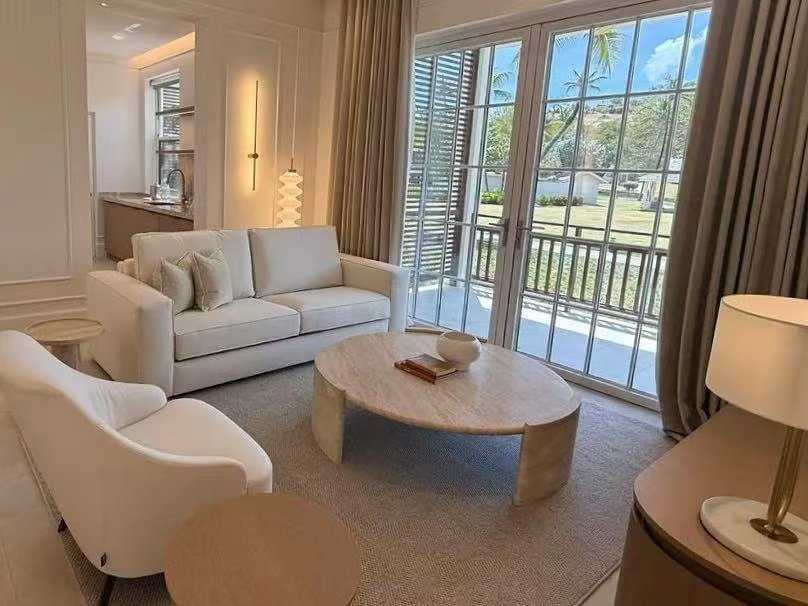
Calabash Hotel, Grenada — FF&E supply for a 4 Superior Deluxe Suites and 2 Penthouse Suites extension. Calabash Hotel is recognised as a Michelin Two Key Hotel and was ranked among the Top 10 Best Resorts in the Caribbean in the Travel + Leisure World’s Best Awards 2026. Travelmarvel Rigel — FF&E supply for an 89-cabin luxury river cruise vessel operated by APT Travelmarvel.
1. What Does Your Procurement Process Look Like, Start to Finish?
Every project follows the same structured sequence, regardless of size or destination. The stages are not arbitrary — each one exists because skipping it creates a specific, documented category of problem downstream.
| Stage | What happens | Why it matters |
|---|---|---|
| Project review & supplier matching | We review your design intent, specification documents, and project constraints. We identify which factories across our network are appropriate for each product category. | Factory selection is the foundational decision. The wrong factory for a specification cannot be corrected by better QC later. |
| Quotation refinement | We work through the specification with selected factories, resolving ambiguities and closing gaps before any price is confirmed. | Specification gaps become factory assumptions. Factory assumptions become production surprises. |
| Order confirmation & deposit | Formal order placement with agreed shop drawings, sample references, and production timeline. | Establishes the contractual production standard before a single component is cut. |
| Shop drawing & material approval | Full shop drawing package reviewed and approved by the client before production begins. | The approved drawing is the production reference. Any deviation from it is a non-conformance. |
| Production monitoring | Progress tracking at agreed milestones — substrate stage, finishing stage, assembly. | Catches material substitution and process deviation before they become batch-scale problems. |
| Quality inspection | Formal pre-shipment inspection against the approved drawing and material sample. Inspection report with photographs provided to client. | The last point at which a defect can be resolved in China rather than at the destination. |
| Consolidation & shipping | Container loading, export documentation, freight coordination to destination port. | A single point of accountability for the full logistics chain. |
| After-sales support | Responsive support for any on-site issues identified after delivery. | The relationship does not end at the port. |
2. When Should I Visit China, and What Does a Sourcing Trip Actually Involve?
This is one of the questions we think about carefully for every client, because the timing of a sourcing trip materially affects its usefulness.
Our recommendation: visit once you are further along in refining the procurement scope and finalising quotations. By that point, we have a clearer picture of which product categories require the most attention, which factories are the strongest candidates for your specific specification, and what decisions need to be made in person that cannot be resolved remotely.
A sourcing trip that arrives before the scope is defined becomes an expensive market survey. A sourcing trip that arrives after the scope is defined becomes a genuine audit and decision-making exercise — which is what produces results.
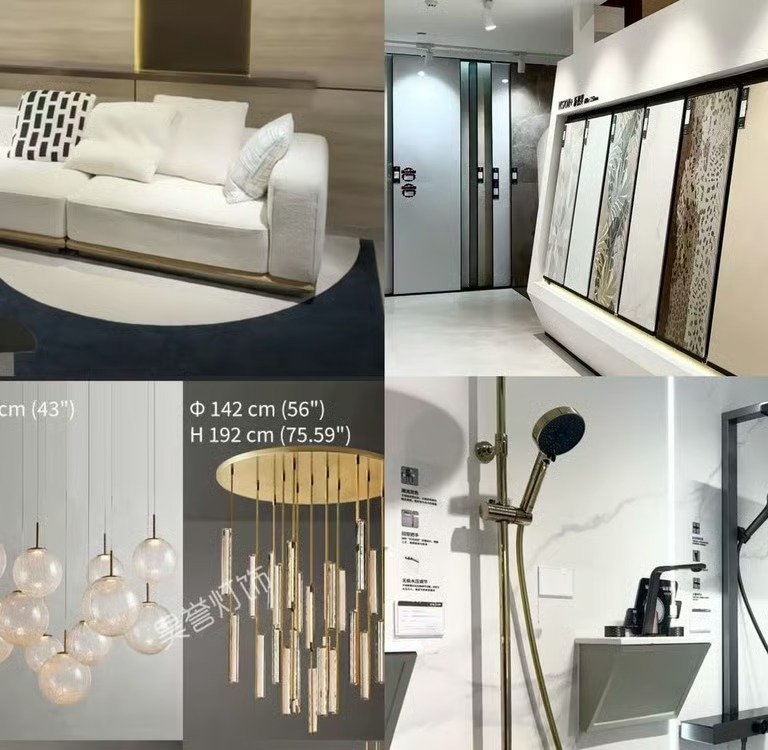
What is covered on a typical trip
• Pre-arranged factory appointments — we do not walk in unannounced on your behalf at trade fair level. Every factory visit is pre-screened against your project requirements.
• Private transport throughout — pickup, factory-to-factory transfers, and return. We cover up to three guests.
• On-site technical translation — not general language interpretation. We translate manufacturing intent: converting your design specification into factory language and the factory’s production questions into client-ready answers.
• Sample and prototype review — where a mock-up has been commissioned in advance, we review it together on the factory floor against your specification, resolving gaps in real time rather than across multiple revision cycles.
A real 2-day itinerary from a recent client group
Below is an actual itinerary from a group we hosted in July 2026 — two days, six category visits, two manufacturing hubs, staying at the W Hotel Guangzhou between days.
| Friday 25 July 2026 | Saturday 26 July 2026 | |
|---|---|---|
| Morning pickup | 8:30 am | 8:30 am |
| Category visits | Tiles · SPC Flooring · Wall & Floor Finishes · WPC Decking · Plumbing fixtures | Kitchen 1 · Kitchen 2 · Engineered timber flooring · Windows · Furniture |
| Overnight stay | W Hotel Guangzhou | W Hotel Guangzhou |
Three to five suppliers per day is the practical maximum for maintaining focus and generating actionable decisions. More than that and the visits become a blur of showrooms rather than a productive audit.
3. How Do You Select Which Factories to Recommend?
We distinguish between two sourcing situations, and we are transparent about both.
For many product categories — particularly those where we have managed multiple hotel projects — we already have long-term manufacturing partners whose production capabilities, quality management systems, and delivery reliability we know directly from experience. For these categories, factory selection is a matching exercise: pairing your specification against a known capability.
For categories where your project requires a specialist we do not currently work with regularly — solid timber furniture with a rustic, natural aesthetic is a good example of a category where specialist capability varies significantly across the Guangdong supply base — we conduct active factory sourcing: identifying candidates, conducting on-site capability assessments, and presenting a shortlist with our recommendation before your visit.
What we do not do is recommend a factory because it offers us a commercial incentive to do so. The factories we recommend are the ones appropriate for your project. That principle is the foundation of how we work.
On independent factory selection
Rather than relying solely on the large furniture malls, we generally combine visits to premium showrooms with selected factories. Many of the strongest hospitality manufacturers are factory-based and maintain their own showrooms or mock-up rooms rather than retail displays. Once we understand your design direction, budget expectations, and brand positioning, we can prepare a tailored list of manufacturers that best suit your project.
4. Do You Receive Commission or Rebates from the Factories You Recommend?
No. We do not receive supplier rebates or hidden commissions.
We acknowledge this question directly because it is one of the most important questions a buyer can ask of any China sourcing agent — and because the honest answer differentiates a genuine procurement partner from a trading company operating under the description of an agent.
An agent who receives factory commissions has a financial incentive to recommend those factories regardless of whether they are the best fit for your project. Every recommendation they make is filtered through that incentive, whether they acknowledge it or not.
Our business is built on long-term client relationships and pricing transparency. That means our service fee may appear higher than what you see from some other agents operating in this market. We consider this a straightforward trade-off: a lower fee from an agent earning factory commissions is not a better deal. It is a different model with a different set of incentives — and those incentives do not all point in your direction.
5. What Does Your Quality Control Process Look Like?
Quality control is not a single event at the end of production. It is a continuous process that begins before the first factory is briefed.
Before production
• Shop drawings reviewed and approved — the approved drawing is the production reference, not the sample alone.
• Material samples confirmed and retained — colour panels, finish references, and hardware samples held as the physical production standard.
• Factory capability verified — for any factory we are working with for the first time on a hotel project, we conduct an on-site assessment covering production equipment, quality management systems, and current capacity.
During production
• Progress monitoring at agreed milestones — substrate stage, finishing stage, assembly. For complex or high-value items, we increase monitoring frequency.
• Early issue identification — production problems caught at the substrate stage cost hours to resolve. The same problem caught at the pre-shipment inspection stage costs days. The same problem caught at the destination port costs weeks and significantly more money.
Before shipment
• Formal pre-shipment inspection — workmanship, dimensions, finishes, functionality, quantities, and packaging all checked against the approved specification.
• Inspection report with photographs — provided to you for review before the container is sealed. You approve the shipment; we do not ship without that approval.
Rework managed in China — any non-conformance identified at inspection is resolved before loading. A defect resolved in a Guangdong factory takes days. The same defect arriving at a Caribbean island or a UK construction site takes months.
6. How Do You Handle Custom Product Development and Prototypes?
Custom and bespoke manufacturing is one of the areas where the difference between a managed process and an unmanaged one is most visible — and most expensive when it goes wrong.
Our development process for custom items follows a deliberate sequence:
• Design review: we review your design drawings and specifications before briefing any factory, identifying gaps that will create production ambiguities if not resolved upfront.
• Shop drawing preparation: approximately five days from design brief to factory-ready shop drawings. These are the factory’s production instruction document, not a design visualisation.
• Shop drawing and material submission: drawings and physical material samples submitted for your review and approval. Revision cycles are managed as a defined process, not an open-ended back-and-forth.
• Prototype production: where required — particularly for complex joinery, non-standard dimensions, or finish processes being used for the first time on a project — a prototype is produced and reviewed in person before mass production is approved.
• Production standard retention: approved samples and documentation are retained throughout production as the reference against which every finished unit is checked.
The prototype review, when timed correctly, is where the most valuable decisions on a custom project happen. It is the only point at which you can evaluate proportion, finish quality, and material character in person — before those decisions are locked into a full production run.
7. What Timeline Should I Plan For?
Timeline is one of the questions where honest answers are most important — and most frequently softened by agents trying to win business by appearing more convenient than they are. We give realistic timelines rather than optimistic ones, because a project that starts with an accurate timeline stays on track. A project that starts with an underestimated timeline creates pressure that compounds through every stage.
| Stage | Approximate duration | Notes |
|---|---|---|
| Shop drawing preparation | ~5 days | From confirmed design brief |
| Shop drawing revisions & approval | 7–30 days | Depends on approval timeliness on client side |
| Sample production (if required) | ~30 days | For custom items requiring a prototype |
| Mass production | 40–50 days | Depends on product complexity and order volume |
| Quality inspection | ~3 days | At production completion, before loading |
| Rework (if required) | 5–14 days | Depends on the nature and scale of issues identified |
| Ocean freight (China to Bali example) | 11–23 days | Port-to-port transit time |
| Contingency buffer | 14 days | We recommend building this into every project timeline |
The single most common cause of timeline failure on hotel projects is the approval process on the client side. Shop drawing revisions and approval can take anywhere from seven to thirty days depending on how quickly the design team and the client move. That window is entirely outside our control — and it is the window that most often determines whether a project arrives on time.
Our recommendation: treat the approval stage with the same urgency as the production stage. A two-week delay in approving shop drawings is a two-week delay in the delivery date, compounded by any downstream effects on factory scheduling.
8. What Recent Hotel Projects Have You Completed?
Two of our most recently completed hospitality projects illustrate the range of work we manage:
Calabash Hotel, Grenada — Michelin Two Key Resort
We supplied FF&E for the hotel’s extension comprising 4 Superior Deluxe Suites and 2 Penthouse Suites. Calabash Hotel is recognised as a Michelin Two Key Hotel and was ranked among the Top 10 Best Resorts in the Caribbean in the Travel + Leisure World’s Best Awards 2026. The project required Caribbean-destination logistics, coastal-environment material specifications, and the precision that a Michelin-rated property’s brand standards demand.
Travelmarvel Rigel — Luxury River Cruise Vessel
We supplied FF&E for an 89-cabin luxury river cruise vessel operated by APT Travelmarvel. Marine project procurement has specific requirements that land-based hotel projects do not: weight constraints, marine-grade material specifications, installation access constraints, and compressed delivery windows aligned to vessel build schedules. This project is a strong reference for buyers with similar technical specification challenges.
References from both projects are available on request.
A note on project references
We can provide direct contact references for both projects listed above. If you are evaluating multiple agents for a hotel project, we encourage you to request and follow up on references — not just read them on an agent’s website. A reference that can be verified by a phone call or email is materially more valuable than a reference that exists only as a logo on a case study page.
9. How Do You Handle Logistics, Consolidation, and Shipping?
Once production is completed, goods are delivered to our warehouse for consolidation — or shipped directly from the factory if the volume justifies a dedicated full container. We manage container loading, export documentation, and shipping arrangements with either our preferred freight partners or a shipping agent you have already appointed.
For destination markets where customs clearance has specific documentation requirements — the US, Caribbean territories, the UK, and increasingly Bali and Southeast Asia — we coordinate directly with the appointed customs clearance agent at the destination and provide all documentation required for a smooth delivery.
Consolidation is one of the most tangible efficiency advantages of using a single sourcing agent across multiple product categories. A hotel project sourcing furniture, building materials, and lighting through separate channels ships separate containers with separate documentation. The same project managed through a single agent consolidates everything into the minimum number of containers — one customs event, one delivery coordination, one point of accountability if anything arrives incorrectly.
Frequently Asked Questions
Do you work with projects outside the Caribbean and Asia Pacific?
Yes. We regularly manage FF&E projects for hotel and resort clients in the United States, Canada, the United Kingdom, and the Caribbean, as well as hospitality projects in Southeast Asia. The logistics and compliance requirements differ by destination, and we confirm destination-specific documentation and certification requirements at the project briefing stage for every new market.
Can I send my own specification to get an initial quotation?
Yes — and sending a specification document early is one of the most useful things you can do to accelerate a project. Even a preliminary specification allows us to identify the appropriate factory candidates, flag any gaps or ambiguities that need resolving before factory briefing, and provide an initial indicative cost range that allows you to assess project viability before committing to the next stage.
What happens if quality issues are found after the goods arrive?
Our pre-shipment inspection process is specifically designed to prevent this — non-conformances are identified and resolved before loading, and we do not approve a shipment that does not meet the specification. In the rare instances where an issue is identified post-arrival — typically concealed transit damage — we manage the claim process with the factory and logistics partners and work toward the fastest practical resolution. Having the inspection report and packing photographs is critical for any post-arrival claim; this documentation is a standard output of our pre-shipment inspection process.
Is a sourcing trip necessary, or can the entire process be managed remotely?
The entire procurement process — factory selection, specification management, sampling, production monitoring, QC, and logistics — can be and regularly is managed remotely. A sourcing trip adds value by enabling direct assessment of factory capability and production quality, and by allowing prototype review decisions to be made in person rather than through photographs. Whether it is worth the time and travel cost depends on the scale and complexity of your project. We are happy to advise on whether a visit would meaningfully change the outcome for your specific scope.
The Honest Answer to Every Question
The questions in this guide are the questions that serious buyers ask — and they deserve direct answers, not sales copy. If your project question is not covered here, contact us. We respond to every project enquiry with the same directness: an honest assessment of whether and how we can help, what the process would look like, and what you should expect at each stage.
FF&E Sourcing China is based in Guangzhou with active procurement operations across Foshan, Dongguan, Zhongshan, and the wider Guangdong manufacturing corridor. We work with hotel operators, resort developers, interior designers, and commercial project teams on projects delivered globally.