
As the hospitality industry shifts toward sustainable design, developers are under increasing pressure to find materials that deliver high aesthetic value without compromising on environmental performance. Bamboo has emerged as one of the most compelling answers to that demand — and one of the most misunderstood.
When sourced correctly and specified with the same rigour applied to any contract-grade material, bamboo is not a craft product or a compromise. It is a high-performance architectural element that rivals traditional hardwoods on strength, workability, and visual impact — while offering a sustainability profile that no timber species can match.
FF&E Sourcing China has integrated bespoke bamboo sourcing into our specialist capabilities for hotel and resort projects. This guide covers what hospitality buyers need to know: where the best bamboo comes from, how manufacturing method affects the finished result, why bamboo sidesteps the EU deforestation regulations entirely, and how we apply the same procurement rigour to bamboo that we apply to every FF&E contract.
Who this guide is for
Hotel developers, resort operators, and interior designers specifying sustainable materials for hospitality projects. Procurement teams evaluating bamboo as an architectural or decorative element for new builds or refurbishments in the UK, Europe, Caribbean, and North America
1. Why Bamboo Deserves a Place in Hotel FF&E Specifications
Bamboo is the fastest-growing plant on earth — some species grow up to 90 centimetres per day — and reaches structural maturity in three to five years, compared to 20 to 80 years for the hardwoods it replaces. That growth rate makes it genuinely renewable in a way that timber certification schemes can only approximate.
But the sustainability story is the entry point, not the whole case. The material performance of properly processed bamboo is what makes it relevant to serious hospitality procurement:
• Hardness: Moso bamboo — the primary species used in architectural applications — has a Janka hardness rating of approximately 1,380 lbf, comparable to European oak and significantly harder than pine or cedar.
• Dimensional stability: Engineered bamboo panels produced under controlled pressing conditions exhibit lower moisture-related movement than many hardwoods, reducing the risk of warping or gapping in high-humidity hospitality environments.
• Workability: Bamboo processes cleanly with standard woodworking machinery — CNC cutting, routing, sanding, and finishing — making it compatible with the same factory workflows used for conventional timber millwork.
• Aesthetic range: From raw natural finishes in eco-resort contexts to carbonised dark tones and high-gloss lacquered surfaces for contemporary urban hotels, bamboo offers broader visual range than most buyers expect.
The combination of genuine sustainability credentials, strong material performance, and visual flexibility makes bamboo a credible specification choice for the full range of hospitality project types — not just boutique eco-resorts.
2. Material Science: Side-Pressed vs. Flat-Pressed Bamboo
The most important technical decision in a bamboo specification is the pressing method. This single choice determines the visual character, structural performance, and aesthetic appropriateness of the finished material — and it is a decision that must be made before the factory brief is written, not after samples arrive.
Flat-pressed (horizontal)
In flat-pressed bamboo, the strips are laid horizontally and pressed with the natural node pattern visible on the face of the panel. The result is a more organic, naturalistic appearance — the characteristic wide, rounded grain lines that most people associate with bamboo as a material.
Flat-pressed bamboo is well-suited to boutique eco-resorts, spa environments, and interior schemes that draw on natural, biophilic, or rustic-luxury aesthetics. It reads as unmistakably botanical and benefits from its natural texture in contexts where that quality is part of the design intent.
Side-pressed (vertical)
In side-pressed bamboo, the strips are turned on their edge before pressing, bringing the narrow face of each strip to the surface. The result is a much finer, more uniform linear pattern — clean, tight, and contemporary.
Side-pressed bamboo is the appropriate choice for modern hotel aesthetics: Coastal Modern, New Minimalism, or refined tropical schemes where the goal is a material that reads as premium and architectural rather than naturalistic. It integrates cleanly with stone, metal, and glass palettes without competing visually.
Understanding these distinctions allows us to match the material specification precisely to the interior designer’s intent. For projects where both aesthetics are in play across different spaces, we can source both pressing types from the same supply base in Jian’Ou, ensuring consistent quality across the full specification.
3. The Source: Why Jian’Ou, Fujian Is the Right Origin
While FF&E Sourcing China’s core furniture operations are based in Guangdong Province, the centre of gravity for high-quality architectural bamboo manufacturing is a different geography entirely: Jian’Ou City in Fujian Province, in southeastern China.
Why Jian’Ou specifically
Jian’Ou is designated as China’s Bamboo Capital — a title that reflects both the scale of its bamboo forest resources and the depth of its manufacturing specialisation. The Fujian highlands surrounding Jian’Ou support some of China’s most extensive Moso bamboo forests, providing a stable, high-quality raw material supply chain that begins at source rather than through secondary traders.
The manufacturing concentration that has developed around this resource base is the key advantage for procurement purposes. Unlike a generalised furniture manufacturing hub, Jian’Ou’s factories specialise exclusively in bamboo processing — from raw culm selection and moisture conditioning through engineered panel production, surface finishing, and component manufacture. That specialisation produces a level of process knowledge and quality consistency that cannot be replicated in a general-purpose factory that adds bamboo as a product line.
What factory proximity to the raw material means in practice
• Moisture control: Bamboo must be dried to a stable moisture content before processing — typically 6 to 8 percent for interior applications. Factories proximate to the forest can control this process from harvest. Bamboo sourced through secondary traders and processed remotely is at higher risk of moisture variation that affects dimensional stability in the finished product.
• Culm selection: The specific age, diameter, and wall thickness of bamboo culms affects the quality of the processed panel. Factories working directly with local forests can specify and select culms at source — a quality control step unavailable to factories dependent on traded raw material.
• Traceability: For clients in markets where sustainability documentation is required — particularly the UK and Europe — proximity to and direct relationships with the forest source supports robust chain-of-custody documentation.
4. The Regulatory Advantage: Bamboo and the EUDR
Sustainability compliance has become a procurement requirement, not a preference, for clients developing hotel projects in the UK and Europe. The EU Deforestation Regulation (EUDR) has introduced strict due diligence requirements on imported timber and wood-derived products — creating significant administrative burden for procurement teams sourcing timber-based FF&E.
Why bamboo is exempt
Bamboo is botanically a grass, not a tree. This single taxonomic fact has significant regulatory consequences: because bamboo is not classified as a tree species, it falls outside the scope of the EUDR deforestation and forest degradation provisions entirely.
For procurement teams navigating EUDR compliance, this means that bamboo specification delivers sustainability performance — genuine, measurable, fast-cycle renewability — without the due diligence documentation burden that applies to timber imports. No deforestation risk assessment. No supply chain traceability report to the specific forest parcel. No operator statement requirements.
5. How We Source and Manage Bamboo: The Same Rigour as FF&E
The procurement risks associated with bamboo in a hospitality context are exactly the same as those associated with any other contract-grade material: specification gaps that cause production problems, quality variation between sample and production run, moisture-related damage during transit, and inadequate packing for commercial quantities. Managing those risks requires the same process discipline we apply to every FF&E contract.
Factory audits in Fujian
We physically visit bamboo production facilities in Jian’Ou before committing any order — assessing raw material sourcing practices, drying and moisture conditioning processes, pressing and bonding procedures, surface finishing capability, and export documentation competence. We do not manage this remotely.
Technical vetting
Before production is committed, we verify moisture content of processed material against specification, inspect structural integrity of panel samples, confirm pressing method matches the specification, and assess finish quality against reference standards. For carbonised or stained finishes, colour consistency across batch samples is checked before full production approval.
Specification review
Bamboo specifications from interior design teams are reviewed for completeness before the factory brief is written: pressing method, finish specification, panel dimensions and tolerances, edge treatment, and fire performance requirements for the destination market. Gaps are resolved before production, not after samples arrive.
Export-grade packing and logistics
Bamboo panels and architectural components require specific packing to survive ocean transit without surface damage or moisture ingress. We apply the same multi-layer, moisture-resistant packing standards we use for high-end casegoods. For projects combining bamboo architectural elements with furniture FF&E, we consolidate all items into a single container shipment from China to the destination port.
6. Frequently Asked Questions
Is bamboo suitable for high-traffic hotel environments?
Yes, for the appropriate applications. Moso bamboo in side-pressed (vertical) engineered form has a hardness comparable to European oak and is suitable for wall cladding, feature panels, headboard systems, built-in joinery, and flooring in moderate-traffic areas. For wall and joinery applications, durability is not typically a concern.
Can bamboo be specified alongside other materials in a hotel project?
Yes, and this is the most common approach in practice. Bamboo works particularly well in combination with stone, concrete, metal, and glass palettes — providing warmth and texture without competing with harder material surfaces. In a guest room context, bamboo headboard panels or wardrobe fronts alongside stone bathroom surfaces and metal hardware create a material palette that reads as both refined and sustainable.
Does bamboo require special maintenance in a hotel environment?
Engineered bamboo in a finished and sealed state requires no special maintenance beyond what is standard for timber surfaces — periodic cleaning with appropriate products and avoidance of prolonged water contact on unsealed edges. For coastal resort environments where humidity is a factor, we specify finish systems and edge treatments appropriate to the environment as part of the factory brief.
Can you source bamboo alongside furniture FF&E in the same project?
Yes. For projects that include both bamboo architectural elements and conventional furniture FF&E, we manage both through the same procurement process and consolidate all items into a single container shipment. This reduces freight cost, simplifies customs documentation, and provides a single point of accountability for the complete project scope.
What certifications are available for bamboo from Jian’Ou?
Bamboo from established Fujian manufacturers can be supplied with FSC certification for the raw material, SGS or Bureau Veritas factory audit certification, and standard export documentation including certificate of origin and phytosanitary certificate. For the UK and European markets, the EUDR exemption means additional timber-specific documentation is not required.
Ready to Specify Bamboo for Your Next Hotel Project?
Whether you are evaluating sustainable material options at the design stage or finalising a specification for a specific bamboo application, FF&E Sourcing China can provide a project feasibility assessment at no cost. We will review your specification, confirm sourcing feasibility from our supply base, and advise on lead times, compliance documentation, and consolidation with any furniture FF&E procurement running in parallel.
Incorporating bamboo into a hotel project? Request a project consultation: ffesourcing.com
EUDR compliance summary for bamboo
Bamboo is classified as a grass, not timber, and is fully exempt from EU Deforestation Regulation (EUDR) requirements. For hotel projects in the UK and Europe, bamboo specification achieves sustainability targets without EUDR due diligence obligations. Verify with your legal or compliance team for your specific project jurisdiction before publishing.
Request a free project feasibility assessment: ffesourcing.com
This regulatory advantage is particularly relevant for developers working on projects in the UK, EU member states, or for international hotel brands with European sustainability commitments. The combination of genuine environmental performance and regulatory simplicity makes bamboo a strategically smart specification choice in 2026.
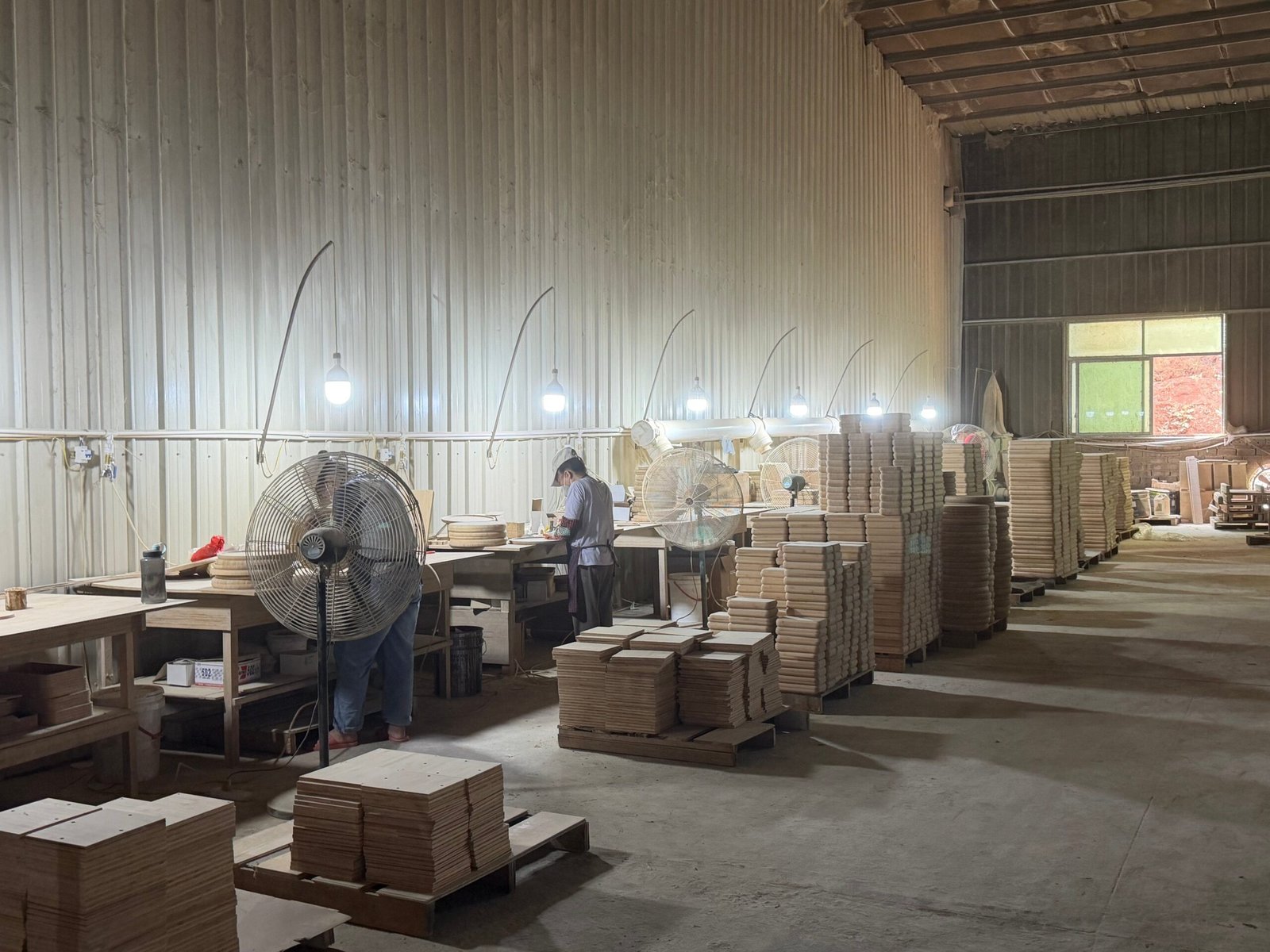
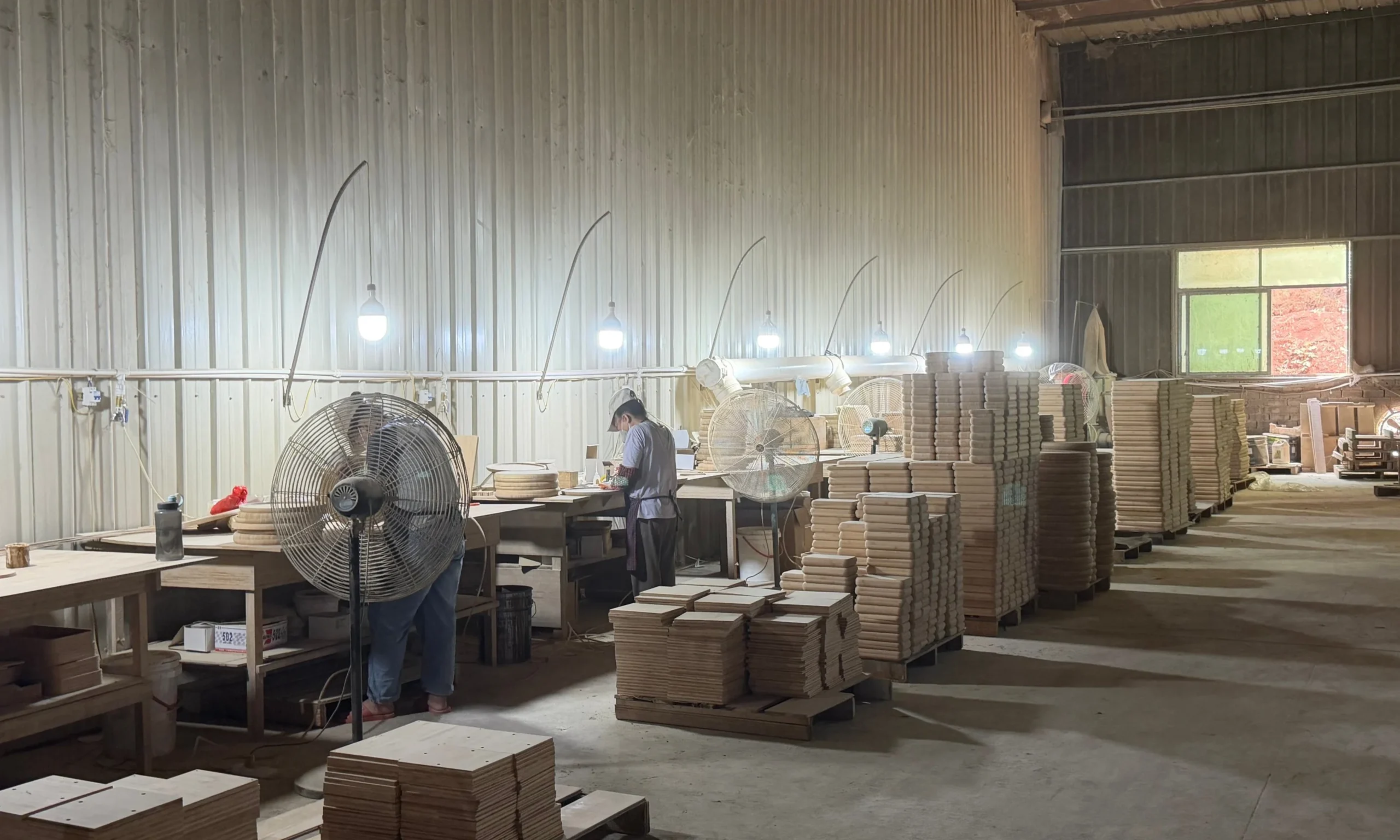
Fujian bamboo factory
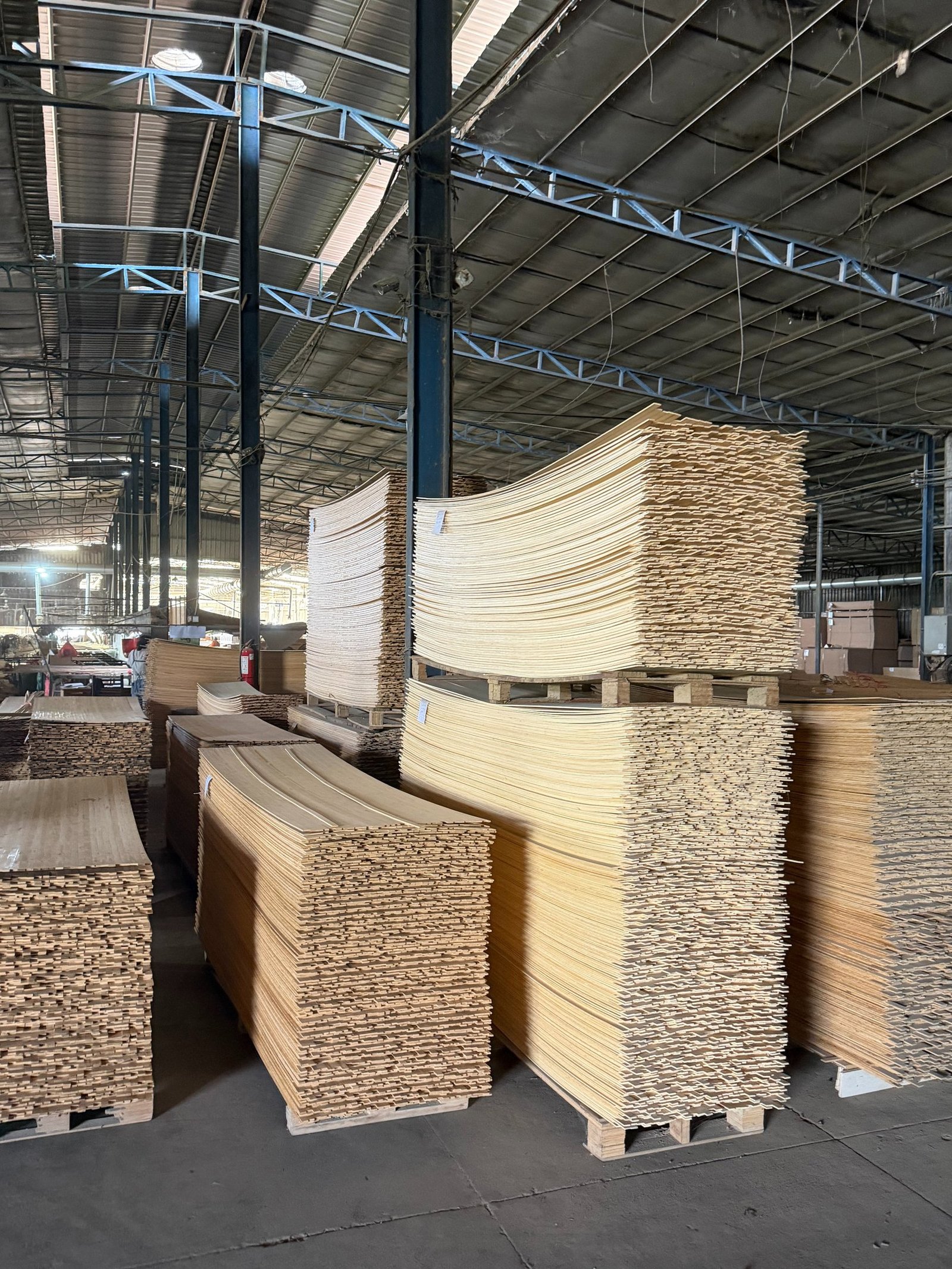
pressed bamboo panel