
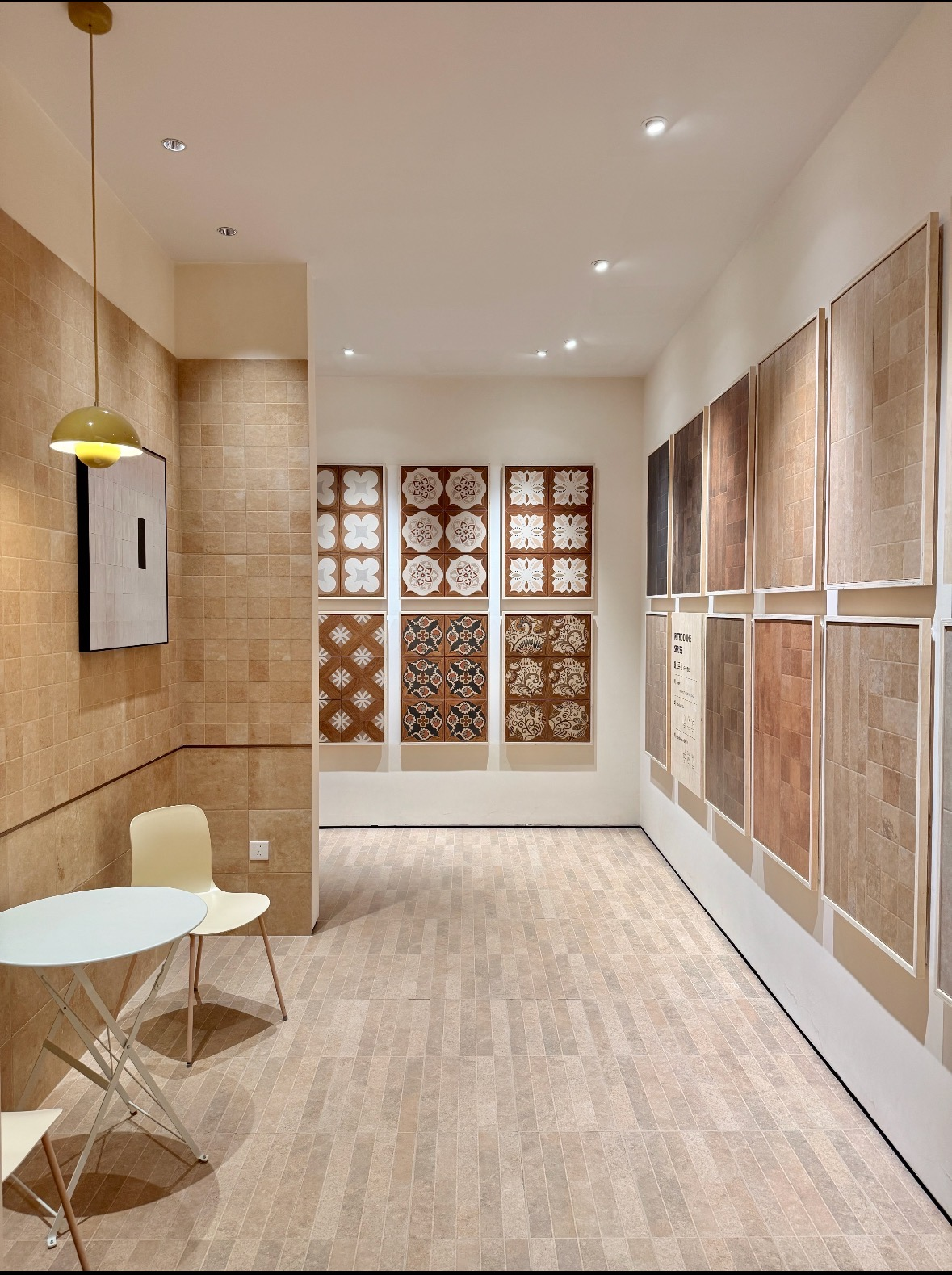
Most hotel developers who source FF&E from China do not realise that the same supply chain — the same Guangdong factories, the same container logistics, the same quality control process — can cover the building materials specification too. Tiles, porcelain sanitary ware, interior and exterior doors, and anti-corrosion hardware and coatings for coastal environments are all manufactured at scale in China, at price points and quality levels that compare directly with European and regional suppliers. This guide explains what to source, what to specify, and what to watch for at each category.
When a hotel developer or resort owner approaches FFE Sourcing China, the conversation usually starts with guest room furniture: casegoods, upholstery, outdoor terrace pieces. The building materials specification — the tiles going into the bathrooms and public areas, the sanitary ware, the door sets, the ironmongery — tends to be handled separately, often through local suppliers or a regional procurement route.
This separation costs money and adds complexity. The same Foshan and Guangdong supply chain that produces world-class hotel furniture also produces large-format porcelain tiles used in five-star hotel lobbies across Europe, the Caribbean, and the Middle East; vitreous china sanitary ware to the same dimensional standards as European branded products; solid core door sets to fire and acoustic ratings required by international hotel brands; and 316-grade stainless steel hardware and powder-coated aluminium profiles rated for coastal salt-air exposure.
Consolidating building materials into the same sourcing programme as FF&E means one China trip, one factory management process, one pre-shipment inspection, and one container. For resort and island destination projects where logistics cost is already elevated, the savings on freight alone are significant. This guide covers the four building material categories most commonly sourced through FFE Sourcing China, with specification guidance for resort and coastal environments.
| Who this guide is for
Hotel developers and owners managing the procurement of a new build or major refurbishment — typically in the Caribbean, Mediterranean, or Indian Ocean — who are already sourcing or considering sourcing FF&E from China and want to understand whether building materials can be added to the same programme. Interior designers specifying finishes for resort properties who want to understand China-origin quality benchmarks, minimum order quantities, and lead times. |
1. Tiles: Large-Format Porcelain for Hotels and Resorts
China is the world’s largest producer of ceramic and porcelain tiles, accounting for roughly 50% of global output. The Foshan ceramic cluster in Guangdong produces tiles supplied to hotel projects across six continents, including properties at the five-star and ultra-luxury tier. The quality ceiling is high; the price positioning, even at the premium end of the China market, is typically 30 to 60% below equivalent European product.
What to specify for hotel and resort applications
| Specification | Standard requirement | Resort / coastal note |
| Format | 600×600mm standard; 600×1200mm, 800×800mm, 1200×1200mm available at scale | Larger formats (1200×1200mm and above) create fewer grout lines in public areas and bathrooms — specified by many resort brands for a cleaner finish |
| Water absorption | ISO 10545-3: ≤0.5% for porcelain (Group BIa) | Critical for any interior or exterior coastal application. Confirm test certificate, not just the factory’s stated spec |
| Slip resistance | R9 minimum for dry internal areas; R10 for wet areas (shower, pool surround, external walkways); R11 for ramps | Many Caribbean jurisdictions follow UK/EU standards. Confirm R-rating on the batch, not just the catalogue |
| Breaking strength | ISO 10545-4: ≥1,300N for floor tiles in public areas | Higher traffic public areas (lobbies, corridors) should specify ≥1,500N |
| Chemical resistance | ISO 10545-13: Class ULA minimum (unaffected by pool chemicals, cleaning agents) | Essential for tiles adjacent to pools and in bathrooms where aggressive cleaning products are used |
| Frost resistance | ISO 10545-12: frost-resistant classification required for any external application | Caribbean and Indian Ocean projects rarely need this; Mediterranean and higher-altitude properties may need to confirm |
| Rectified edges | Required for large-format tiles set with grout joints of 2mm or less | Non-rectified tiles require wider grout joints; specify rectified for all large-format hotel applications |
Pricing benchmarks (EXW Foshan, October 2026)
| Category | EXW price range (per m²) | Comparison: European equivalent |
| Standard 600×600 full-body porcelain (matte or polished) | USD 8–18 | EUR 25–45 |
| Large format 600×1200 or 800×800 full-body porcelain | USD 14–28 | EUR 35–65 |
| Marble-look sintered stone (Lapato or polished finish) | USD 22–45 | EUR 55–120 |
| Wood-effect planks (200×1200mm, hotel-grade) | USD 16–30 | EUR 40–75 |
| Anti-slip pool and outdoor porcelain (R10/R11 rated) | USD 12–24 | EUR 30–55 |
| Mosaic sheets (glass or porcelain, pool-grade) | USD 20–50 | EUR 60–130 |
Minimum order quantities for custom colours or finishes are typically 300–500m². Standard catalogue tiles can be ordered in smaller quantities (100m² minimum at most factories) but at higher per-unit cost. For a 60-room resort with standard bathroom and public area specification, total tile quantities are typically 1,500–3,000m², well above any MOQ threshold.
Click here to read how a real coastal resort project.
2. Sanitary Ware: Vitreous China and Acrylic for Resort Bathrooms
China produces the full range of hotel-grade sanitary ware — wall-hung WCs, back-to-wall suites, freestanding baths, vanity basins, shower trays — to the same dimensional standards as European branded product. The major China sanitary ware production cluster is in Chaozhou, Guangdong, approximately two hours from Foshan, and the leading factories supply hospitality projects globally including branded four- and five-star hotels.
Key specification points for resort bathrooms
- Vitreous china grade — specify Grade A vitreous china (ISO 14688) for all WCs, basins, and bidets. Grade A has zero blemishes visible from 1 metre under standard light conditions. Lower grades are acceptable for concealed cisterns and back-boxes but should not be used for exposed sanitaryware in a resort context.
- Glaze hardness and chemical resistance — the glaze on hotel sanitary ware must resist the aggressive cleaning chemicals used in high-frequency housekeeping cycles. Specify Mohs hardness ≥5 and confirm chemical resistance to ISO 10545-13 equivalent standards. Cheap sanitaryware loses its glaze surface within two to three years under resort cleaning regimes.
- Water efficiency — dual-flush WC suites (4/2.6L or 6/3L depending on brand standard) are now specified as standard on most international hotel brand projects. China factories produce dual-flush mechanisms to WELS and EU flush volume standards. Confirm the specific flush volume against the brand’s environmental requirements.
- Freestanding bath construction — acrylic freestanding baths from China vary significantly in sheet thickness and reinforcement. Specify minimum 5mm solid acrylic sheet with full fibreglass and resin reinforcement. Inadequate reinforcement causes flex and creak under load, which is immediately noticeable in a resort bathroom.
- Concealed cisterns and flush plates — the concealed cistern market in China is competitive. Many factories OEM for European brands. Specify the installation frame system and flush plate finish in the same brief as the WC pan to avoid compatibility issues on site.
| Item | EXW price range (per unit) | Note |
| Wall-hung WC with soft-close seat | USD 85–220 | Grade A vitreous china, dual-flush, soft-close seat included |
| Back-to-wall WC suite (concealed cistern) | USD 120–280 | Includes pan, cistern, frame, flush plate |
| Wall-hung basin (500–600mm) | USD 45–120 | Grade A vitreous china |
| Countertop vessel basin | USD 55–150 | Vitreous china or ceramic |
| Freestanding acrylic bath (1500–1700mm) | USD 280–650 | Solid acrylic, fibreglass-reinforced |
| Walk-in shower tray (stone resin, 900×900mm) | USD 90–180 | Anti-slip surface, waste included |
| Shower valve and handset set (thermostatic) | USD 85–220 | Brass body, chrome or matte black finish |
3. Interior and Exterior Doors for Hotel and Resort Projects
Hotel door sets — the door leaf, frame, and ironmongery as a complete assembly — are a significant procurement line on any new build or major refurbishment. The specification requirements for hotel doors are more demanding than residential: fire rating, acoustic performance, hardware durability under high-cycle use, and finish durability under commercial cleaning. China produces hotel door sets to all of these requirements, and Guangdong manufacturers supply five-star hotel projects internationally.
Guest room entry doors
The guest room entry door is typically the most performance-critical door in a hotel: it must achieve fire rating (FD30 minimum for most international brand standards, FD60 for some), acoustic rating (Rw ≥32dB minimum, ≥38dB for premium tier), pass/fail card access hardware compatibility, and present a premium finish in a high-traffic, high-cleaning-frequency environment.
- Fire rating — FD30 (30-minute integrity) is the minimum for most international hotel brand standards. Confirm the test standard used: EN 1634-1 (Europe/UK/Caribbean with European-influenced building codes) or equivalent. Require the factory to supply a current test certificate from a UKAS-accredited or equivalent third-party laboratory, not a self-declaration.
- Acoustic performance — specify Rw ≥38dB for four- and five-star resort rooms, ≥32dB for three-star. The door leaf alone does not achieve the rated performance: the frame seal, undercut dimension, and installation detail all affect in-situ acoustic performance. Require the factory to supply the full assembly specification including frame, seal, and threshold detail.
- Core construction — solid particleboard or MDF core with hardwood lipping and solid timber stiles provides the best combination of weight, dimensional stability, and sound attenuation. Hollow core doors are not appropriate for hotel guest rooms. For coastal resort environments, specify MR (moisture-resistant) grade MDF or engineered timber cores throughout — standard MDF will swell in high-humidity conditions.
- Surface finish — high-pressure laminate (HPL), wood veneer over MDF, or paint-grade MDF are the standard hotel door finishes from China. HPL is the most durable for high-traffic areas (corridors, back-of-house). Wood veneer provides the premium aesthetic typically specified for guest room entry doors. Confirm the veneer species, cut direction, and finish against the interior design specification.
External and resort-environment doors
For exterior doors, terrace access doors, and any door in a salt-air coastal environment, the specification requirements shift significantly:
- Substrate — solid hardwood, aluminium profiles, or marine-grade composites only. MDF and standard particleboard are not suitable for exterior or high-humidity applications even with surface sealing. Specify solid hardwood (teak, iroko, or meranti for tropical environments) or aluminium-framed glazed door assemblies.
- Ironmongery — 316-grade stainless steel is the minimum for any coastal application. 304 SS will show surface corrosion within 12 to 18 months in salt-air environments. Aluminium-body levers with stainless steel cores are acceptable; zinc alloy (zamak) ironmongery is not suitable for coastal resort environments regardless of surface coating.
- Glazing — laminated safety glass (minimum 6.4mm, 3+0.38+3 laminate) for any door glazing at accessible height. Toughened glass alone is not suitable for door applications under most building codes. For coastal locations, consider solar-control laminate to reduce heat gain in rooms with high solar exposure.
| Door type | EXW price range (per leaf + frame set) | Specification basis |
| Guest room entry door — FD30, Rw38, wood veneer | USD 380–680 | MR-MDF core, solid timber lipping, HPL surround, door closer and lever handle included |
| Guest room entry door — FD30, Rw32, HPL finish | USD 220–380 | Commercial grade, suitable for 3-star and economy tier |
| Connecting door set (acoustic, double-leaf) | USD 480–850 | Rw42 typical, solid core, rebated meeting stiles |
| Bathroom door (solid core, moisture-resistant) | USD 180–320 | MR-MDF or solid timber core, no fire rating required |
| External terrace door (aluminium-framed, glazed) | USD 650–1,400 | Double-glazed, marine-grade hardware, coastal-rated finish |
| Back-of-house fire door (FD60, painted) | USD 280–480 | FD60, steel frame, concealed door closer |
4. Anti-Corrosion Materials for Coastal Resort Environments
This is the category where the gap between standard specification and resort-appropriate specification is widest — and where the cost of getting it wrong is highest. Coastal resort environments, particularly in the Caribbean and Indian Ocean, expose building materials and ironmongery to salt-laden air, UV radiation, high humidity, and frequent rainfall. Materials that perform adequately in a temperate urban environment may fail within 12 to 24 months in these conditions.
Click here to read more about our sourcing guide
Ironmongery and hardware
The single most common premature failure in Caribbean resort FF&E is ironmongery specified to urban-commercial standards deployed in a salt-air coastal environment. The correct specification is straightforward:
| Application | Incorrect specification | Correct specification for coastal resort |
| Door levers and pull handles | Zinc alloy (zamak) body, chrome plated | 316 stainless steel body, brushed or satin finish; or solid brass with marine-grade lacquer |
| Hinges | Steel, zinc-plated | 316 stainless steel, 2BB or 4BB ball-bearing, minimum 3 per leaf |
| Door closers | Standard aluminium body | Stainless steel or coated aluminium body, sealed bearing mechanism |
| Locks and cylinders | Standard Euro profile, steel case | Corrosion-resistant cylinder (Scandinavian oval or Euro profile), brass or stainless steel case |
| Bathroom accessories (towel bars, robe hooks) | Chrome-plated zinc alloy | 316 SS or solid brass with marine lacquer; confirm fixing screws are 316 SS |
| Balustrade and handrail fixings | Mild steel, galvanised | 316 SS throughout; specify on drawings, not just in the spec clause |
| Window hardware (stays, fasteners) | Aluminium standard grade | Marine-grade aluminium (6061-T6) or 316 SS; specify anodising grade and thickness |
Coatings and surface treatments
For structural steel, aluminium profiles, and exposed metalwork in coastal resort environments:
- Powder coating — specify a minimum 80-micron powder coat thickness (AAMA 2604 or equivalent) for aluminium profiles in coastal environments. Standard architectural powder coat (60 microns, AAMA 2603) is not rated for Category C4/C5 corrosivity environments. Require a salt spray test certificate (ISO 9227, minimum 1,000 hours) from the coating applicator.
- Hot-dip galvanising — for structural steel elements, specify hot-dip galvanising to ISO 1461 with minimum 85-micron average coating. Electro-galvanised (thin zinc electroplate) is not appropriate for external coastal applications.
- Duplex coating systems — for the most aggressive coastal exposures (beachfront, within 100m of open ocean), a duplex system combining hot-dip galvanising with a powder coat or epoxy topcoat provides the best corrosion life. Specify the full system: surface preparation, galvanising, primer, topcoat, and minimum thickness at each layer.
- Sealants and adhesives — external sealants in coastal resort environments should be specified as neutral-cure silicone (not acetoxy-cure, which is corrosive to adjacent metals) to ISO 11600 Class F25 LM or better. Specify the brand and product reference, not just the performance class, and require a test installation area for sign-off before full application.
Timber treatments for external applications
Exterior timber elements — decking, pergolas, louvres, screens — require appropriate species selection and treatment for tropical coastal environments:
- Species — teak, ipe (Brazilian walnut), and iroko are the proven choices for coastal resort exterior timber. All three are naturally durable in tropical conditions. Accoya (acetylated radiata pine) is an increasingly specified alternative with Class 1 durability rating and good dimensional stability in high-humidity environments.
- Treatment — for species with lower natural durability (meranti, cedar), specify pressure treatment to the appropriate Use Class: Use Class 3 for above-ground exterior; Use Class 4 for ground contact or water-immersed applications. Confirm the preservative system meets the environmental requirements of the destination — some Caribbean and Indian Ocean jurisdictions restrict certain biocide systems.
- Fixings — specify 316 SS fixings for all exterior timber. A hardwood deck fixed with standard stainless (304 grade) or galvanised screws will show corrosion staining within 12 months in a beachfront environment.
| The cost of under-specifying anti-corrosion materials
A 60-room Caribbean resort that specifies zinc alloy ironmongery on all guest room and public area doors will face a full hardware replacement programme within 3 to 5 years — at a cost that typically exceeds the original ironmongery budget. A specification upgrade to 316 SS at the procurement stage adds 15 to 25% to the ironmongery line. The lifecycle arithmetic is straightforward: correct specification once versus replacement on a cycle of 3 to 5 years. Every experienced resort operator in the Caribbean knows this; not every developer specifying their first Caribbean project does. |
5. Consolidating Building Materials with FF&E: How It Works
The practical question for a developer considering China-sourced building materials is how the process differs from FF&E sourcing. The answer: not significantly, with one important addition.
| Stage | FF&E (furniture) | Building materials |
| Factory brief | Interior design drawings, finish schedule, specifications | Architectural and interior design drawings, specification clauses, relevant test standard references |
| Factory type | Furniture and upholstery factories, Foshan/Guangdong | Tile factories (Foshan); sanitary ware (Chaozhou); door sets (Foshan/Guangzhou); ironmongery (Zhongshan/Guangzhou) |
| Sampling | Prototype pieces and mock-up room | Sample boards (tiles), prototype units (sanitary ware, doors), material samples (ironmongery) |
| Compliance certificates | Fire test certs (upholstery), CARB Phase 2 (composite wood) | ISO test certs (tiles, sanitaryware), fire door certs (EN 1634-1), coating performance certs (AAMA) |
| Production lead time | 10–16 weeks (resort custom) | 8–14 weeks (standard); 12–18 weeks (custom tile formats or colours) |
| PSI | Factory inspection of completed production run | Factory inspection; tile batch sampling for dimensional tolerance and surface quality |
| Consolidation | Multi-factory warehouse consolidation, Guangdong | Same consolidation warehouse; building materials and FF&E in the same FCL container where volumes allow |
| Landed cost multiplier | 1.35–1.60× EXW for Caribbean | Same multiplier; building materials are typically denser and heavier, affecting FCL fill efficiency |
The key addition for building materials is compliance documentation. Furniture procurement requires fire test certificates for upholstered items and CARB Phase 2 compliance for composite wood products. Building materials procurement adds: tile test certificates (ISO 10545 series), fire door test certificates (EN 1634-1 or equivalent), and coating performance certificates for ironmongery and metalwork. A competent sourcing agent manages this documentation as part of the programme; a developer buying building materials direct from a factory needs to know what to ask for.
6. Lead Times and Timeline Integration
One of the practical benefits of consolidating building materials with FF&E sourcing is timeline alignment. Building materials and furniture for a resort project can be scheduled to arrive in the same container, which reduces logistics cost and simplifies the installation programme. This requires parallel briefing from the start of the procurement programme — not sequential briefing where building materials are ordered after furniture is confirmed.
| Category | Standard lead time from confirmed brief | Notes |
| Stock tiles (catalogue product, no custom) | 8–10 weeks to loading | Fastest building material category; batching and dispatch are straightforward |
| Custom or semi-custom tiles (format, colour, finish) | 12–16 weeks to loading | Custom colourways require glaze formula development; add 2 weeks for first batch approval |
| Sanitary ware (standard models) | 8–12 weeks to loading | Grade A vitreous china requires more production time than Grade B |
| Custom sanitaryware (bespoke basin shapes, special finishes) | 14–20 weeks to loading | Mould costs apply; not typically justified unless the volume is high (60+ rooms) |
| Standard door sets (FD30, stock veneer or HPL) | 10–14 weeks to loading | Includes door leaf, frame, and ironmongery package |
| Custom door sets (bespoke veneer match, non-standard dimensions) | 14–18 weeks to loading | Non-standard dimensions require custom frame production |
| Ironmongery (316 SS, standard range) | 6–10 weeks to loading | Fastest and easiest building material category to source; large range of in-stock 316 SS product |
For a resort project targeting a May 2027 opening and following the logistics-backwards timeline outlined in the procurement timeline guide, building materials should be briefed in October to November 2026 to align with the FF&E production and consolidation schedule. Briefing building materials 4 to 6 weeks after furniture briefing typically results in the building materials being ready for the same container loading — the goal is one FCL, not two.
Frequently Asked Questions
Can China-sourced tiles and sanitary ware match European branded product quality?
For the specification benchmarks that matter in a hotel context — water absorption, slip resistance, breaking strength, glaze hardness — yes, at the premium end of the China market. The Foshan ceramic cluster produces tiles used in five-star hotel projects globally, including properties that carry internationally recognised luxury brands. The difference between a premium China tile and a European branded tile at three times the price is primarily brand prestige and finish consistency guarantee — the European manufacturer gives a tighter tolerance on batch-to-batch colour variation and a more comprehensive warranty. For hotel and resort applications where tile is a design element rather than a brand statement, the China-sourced premium tile delivers the same functional performance.
What compliance certificates are required for tiles and sanitary ware at Caribbean destinations?
Caribbean building codes are not uniform across islands. Most CARICOM jurisdictions reference a combination of British Standards, US standards, and local code. The practical approach is to specify to ISO and EN standards throughout (ISO 10545 series for tiles; BS EN 997 for WC suites; BS EN 14688 for basins) and obtain factory test certificates accordingly. Caribbean customs authorities do not routinely inspect building material compliance certificates at the border, but branded hotel operators and their technical services teams will audit compliance documentation during brand review. Having the ISO/EN certificates is the safe default for any internationally-branded resort project.
How do I handle tile and sanitary ware samples for a project where the designer is based in London or Miami?
The standard process is for the factory to produce a sample board (tiles) or show unit (sanitary ware) which is photographed professionally and reviewed remotely as a first pass. For shortlisted options, physical samples are couriered directly to the designer’s office — typically 1 to 3 tiles per option, or a single sanitary ware piece. This adds 1 to 2 weeks of courier transit time but is significantly faster than arranging a factory visit for sampling alone. A combined factory visit — covering both FF&E samples and building material samples in a single China trip — is the most time-efficient approach for designers or project managers with multiple categories to review.
Is it possible to source building materials and FF&E from China for a refurbishment project rather than a new build?
Yes, and refurbishment projects are often well-suited to China sourcing for building materials because the quantities involved — replacing bathroom tiles and sanitary ware across a defined number of rooms — are known precisely before briefing. The MOQ calculation is straightforward, the logistics are the same as for a new build, and the cost saving against European-origin product can fund a significant portion of the refurbishment programme. The key consideration for refurbishments is dimensional compatibility: replacement tiles must match the existing floor screed level and existing fixtures must align with the existing plumbing rough-in positions. A measured survey of the existing installation, not just the design drawings, is the correct starting point for a refurbishment building materials brief.
One Procurement Programme, Not Two
The case for consolidating building materials with FF&E in a single China sourcing programme is straightforward: the supply chain is the same, the logistics are the same, the quality control process is the same, and the cost saving is compounded when both categories travel in the same container. The only requirement is an integrated specification brief that covers both categories from the start of the procurement programme.
FFE Sourcing China manages building material sourcing alongside FF&E as part of a unified project procurement programme. We work from your architectural and interior design drawings, manage factory selection and sampling across all categories, consolidate production at our Guangdong warehouse, and arrange a single FCL shipment to your destination port — Caribbean, Mediterranean, or Indian Ocean.
If you are planning a new build or major refurbishment and want to understand what a combined FF&E and building materials procurement programme would look like for your project, get in touch. We will give you a programme overview and a rough cost comparison within 48 hours.
| Enquire about combined FF&E and building materials sourcing: ffesourcing.com/conract-now |