
Two line items that appear on every hotel project budget — and the confusion between them that consistently causes delays, budget overruns, and gaps in opening readiness.

If you have ever reviewed a hotel project budget, you have seen them: FF&E and OS&E, listed as separate line items, sometimes managed by different teams, always adding up to a number that surprises someone. For hotel owners, resort developers, and project managers approaching a new build or renovation, understanding the difference between these two categories is not a semantic exercise. It is a practical necessity that affects how you plan, when you order, what you budget, and how ready your property actually is on opening day.
The confusion between FF&E and OS&E is more common than most procurement teams will admit — and it consistently shows up in the same way: items that belong in one category get budgeted in the other, or items that belong in neither get forgotten entirely until the project is in its final weeks. This guide explains the difference clearly, with practical examples relevant to hotel and resort projects, and explains where China procurement fits into each category.
| Who this guide is for
Hotel owners and resort developers planning a new build or renovation. Interior designers and project managers coordinating FF&E and OS&E procurement schedules. Purchasing teams who need to brief a China sourcing agent on project scope. Anyone who has ever received a budget estimate and wondered why certain items ended up where they did. |
1. The Definitions: FF&E and OS&E in Plain Language
What is FF&E?
FF&E stands for Furniture, Fixtures, and Equipment. In a hotel or resort context, FF&E refers to the physical items that are installed as part of the property fit-out — the items that guests see, sit on, sleep in, and interact with directly, and that define the look, feel, and comfort of the space.
FF&E items are typically semi-permanent: they are specified during the design phase, ordered months in advance, installed during construction or fit-out, and expected to remain in place for 7 to 15 years before the next refurbishment cycle. They are generally treated as capital assets on the balance sheet.

What is OS&E?
OS&E stands for Operating Supplies and Equipment. These are the consumable, replaceable, and operational items that a hotel needs to function on a day-to-day basis — the things that make the property run rather than the things that make it look a certain way.
OS&E items are typically ordered closer to the hotel opening date, replenished on an ongoing basis, and expensed as operational costs rather than capitalised as fixed assets. They include everything from bed linens and bathroom amenities to kitchen equipment, staff uniforms, and cleaning supplies.
2. FF&E vs OS&E: A Direct Comparison
| FF&E | OS&E | |
| Full name | Furniture, Fixtures & Equipment | Operating Supplies & Equipment |
| Nature | Semi-permanent, installed assets | Consumable, operational items |
| Lifespan | 7–15 years | Weeks to months (replenished regularly) |
| Budget treatment | Capital expenditure (CapEx) | Operating expenditure (OpEx) |
| When ordered | 12–18 months before opening | 3–6 months before opening |
| Lead time | Long — custom manufacturing required | Shorter — standard stock items |
| Installed by | Fit-out contractors, specialist installers | Housekeeping, operations team |
| Examples | Beds, wardrobes, lighting, reception desk | Linens, towels, toiletries, crockery |
| China sourcing? | Yes — primary source for hotel FF&E | Partially — depends on category |
3. What Goes in Each Category: Hotel Examples
The theoretical distinction is straightforward. In practice, the line between FF&E and OS&E blurs — particularly in hotel guest rooms, where a wardrobe is clearly FF&E but the hangers inside it are clearly OS&E, and the in-room safe sits somewhere between the two depending on how your project accountant classifies it.
Here is a practical breakdown by hotel area:
Guest Rooms
| FF&E (Guest Room) | OS&E (Guest Room) |
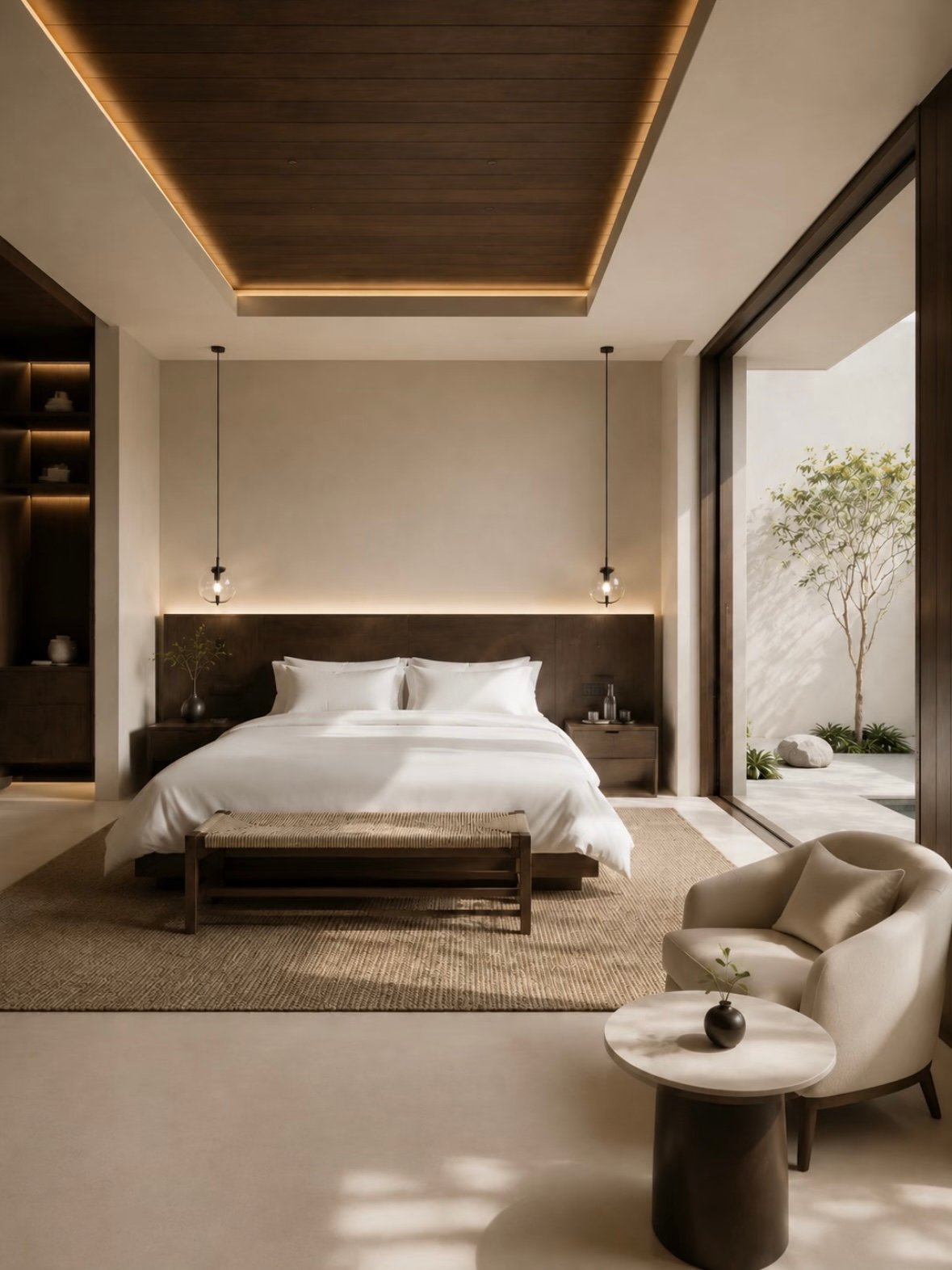
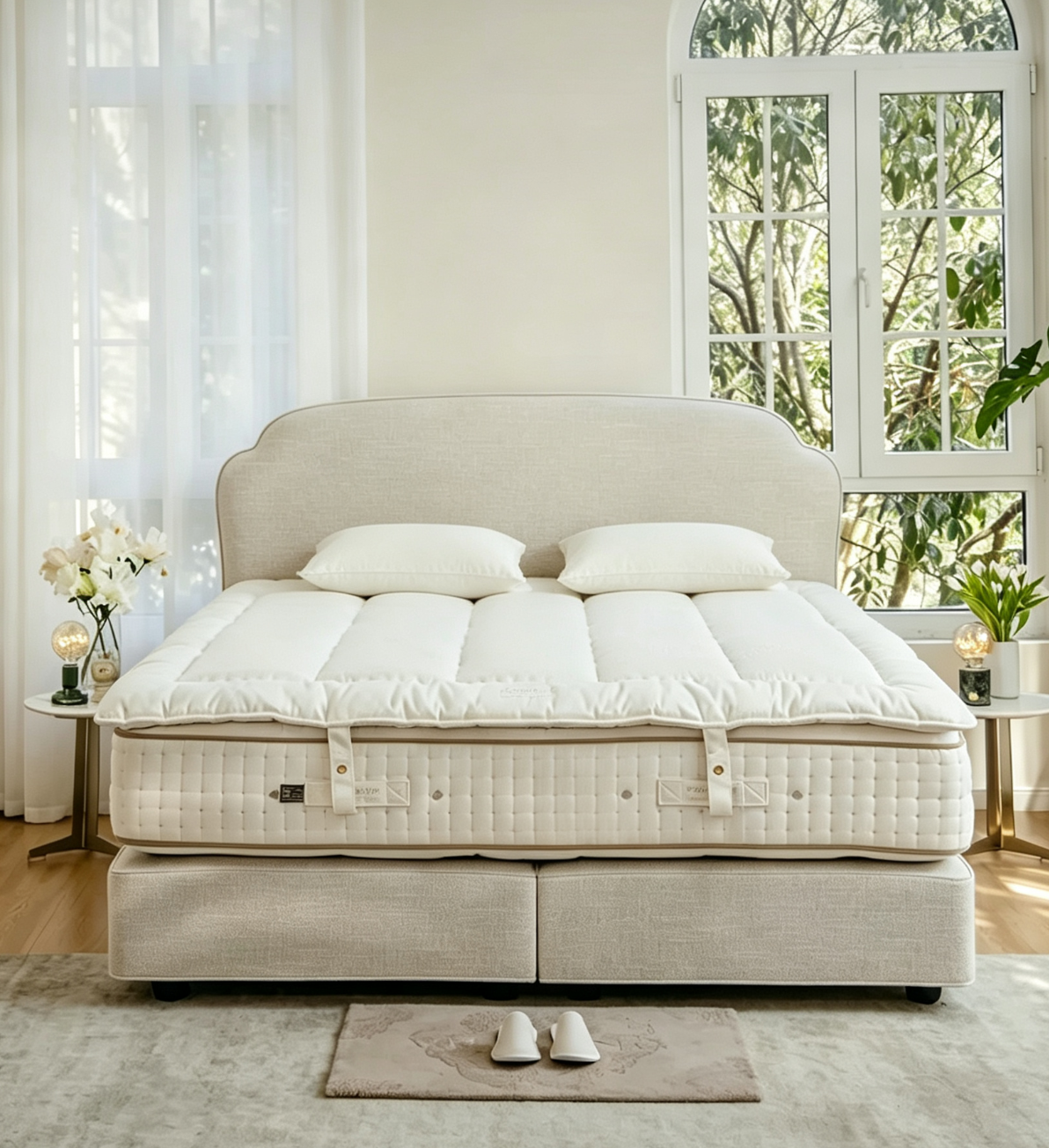
| Bed frame and headboard | Bed linens, pillows, duvet |
| Mattress | Mattress protector and pad |
| Wardrobe / built-in joinery | Hangers, laundry bags |
| Nightstands, desk, chair | Desk stationery, pen, notepad |
| Decorative lighting fixtures | Light bulbs (replaceable stock) |
| Curtains / drapery | Curtain tiebacks (if loose) |
| In-room safe | Safe instruction card |
| Minibar unit / refrigerator | Minibar stock, glassware |
| Television and mounting | Remote control batteries |
| Luggage rack | Luggage tag / handle wrap |
| Bathroom vanity unit | Toiletries, soap dispenser refills |
| Mirror | Guest amenity kit |
| Artwork and wall decor | Guest information folder |
Public Areas and F&B
| FF&E (Public Areas & F&B) | OS&E (Public Areas & F&B) |
| Lobby seating, sofas, armchairs | Cushion covers (if removable/washable) |
| Reception desk and counter | Reception stationery, key card holders |
| Restaurant dining chairs and tables | Table linen, napkins, placemats |
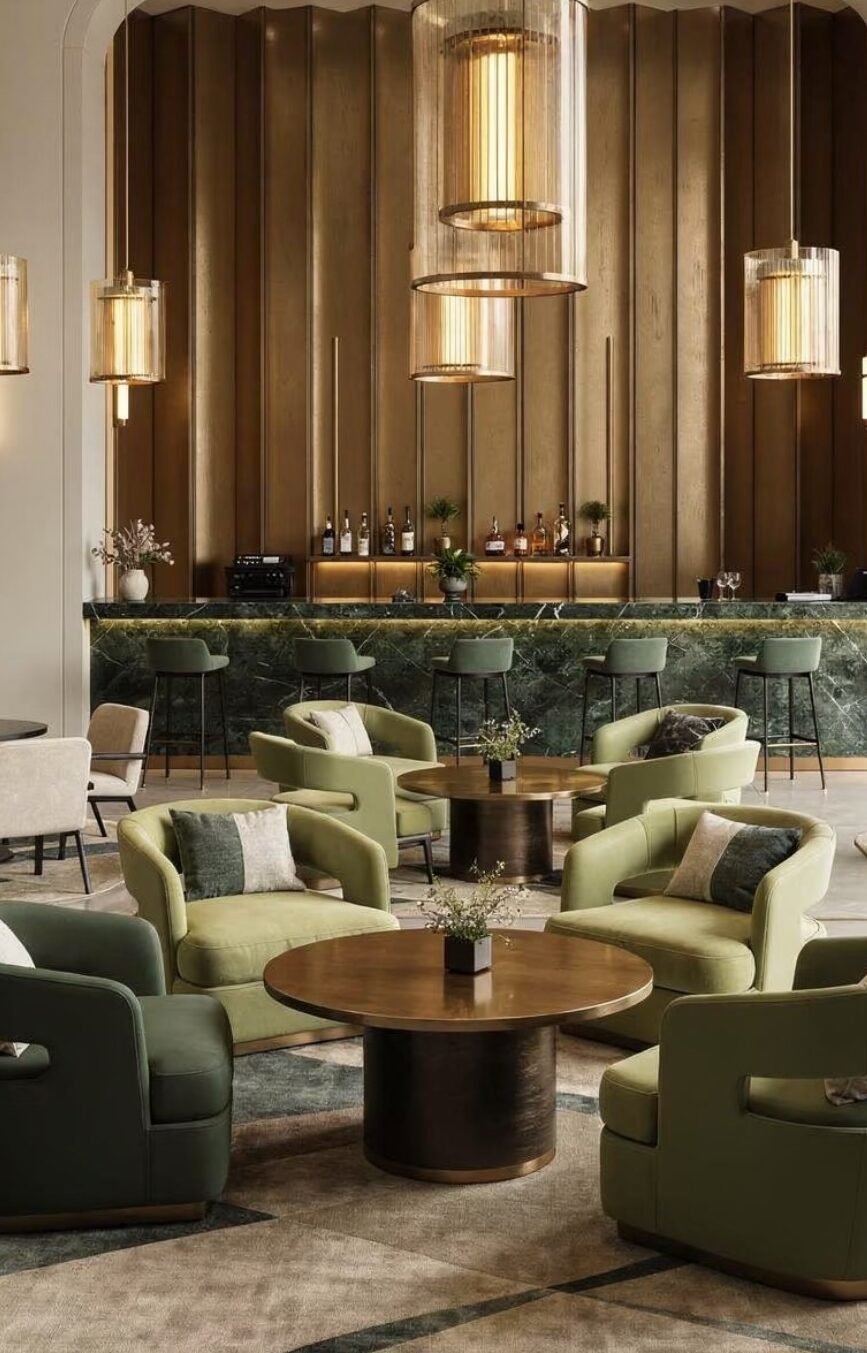
| Bar counter and bar stools | Glassware, cocktail equipment |
| Restaurant pendant and wall lighting | Candles, table numbers |
| Kitchen equipment (commercial) | Kitchen smallwares and utensils |
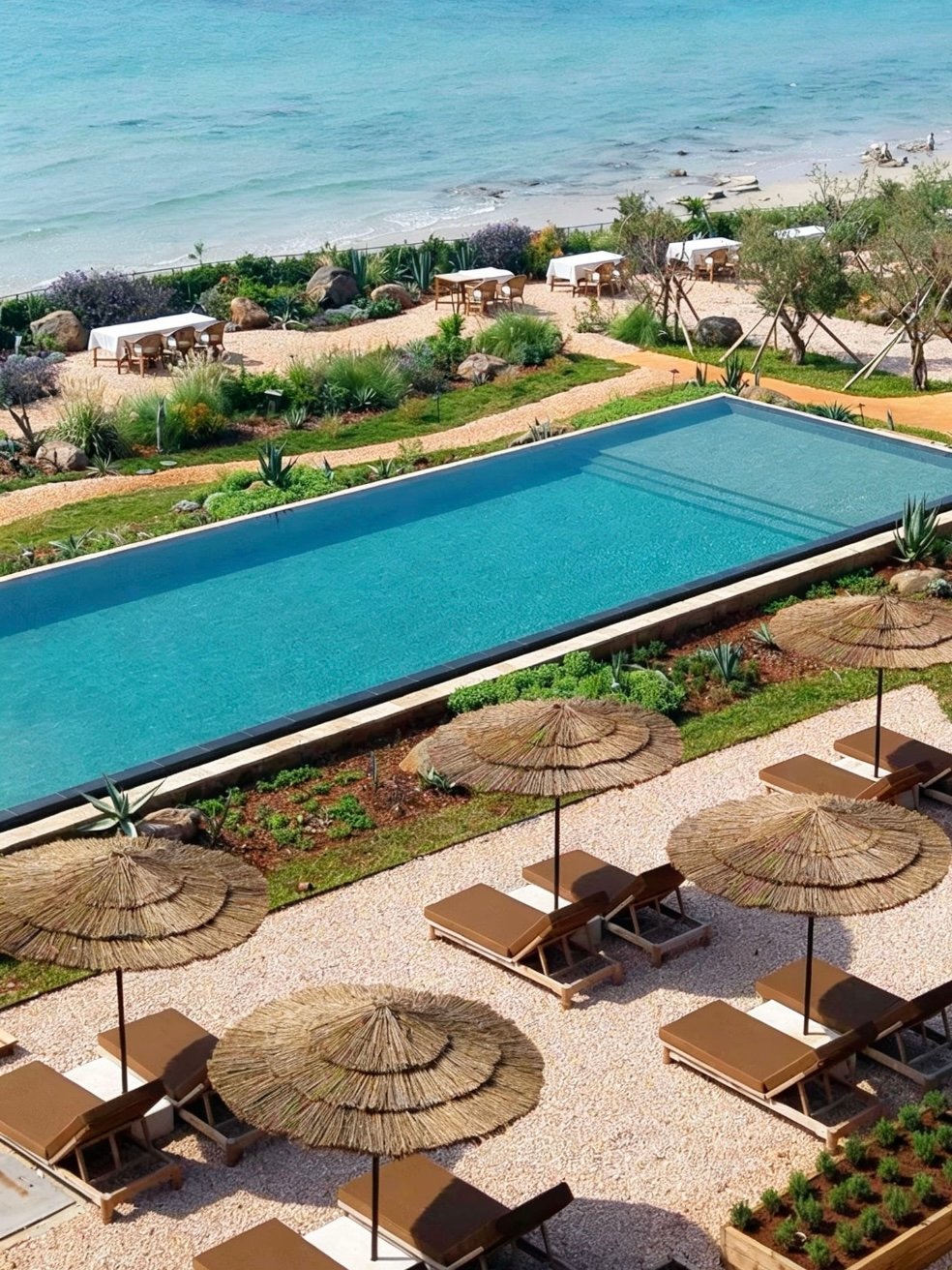
| Pool loungers and outdoor furniture | Pool towels, umbrella covers |
| Spa treatment beds and equipment | Spa consumables, treatment products |
| The grey zone — items that cause the most confusion
Televisions, in-room safes, coffee machines, hairdryers, and irons sit in a grey zone that different hotel brands and accountants classify differently. Some brands treat televisions as FF&E (installed, long-lifespan); others treat them as OS&E (technology, replaced more frequently). Agree on how your project classifies these items before procurement begins — reclassifying mid-project creates budget disruptions. |
4. Why the Distinction Matters for Your Budget and Timeline
The FF&E vs OS&E distinction is not just accounting terminology. It has direct consequences for how you plan and fund your hotel project.
Budget allocation and financing
FF&E is typically included in the project’s capital budget and financed as part of the construction loan or development funding. OS&E is usually funded from the operating budget or pre-opening budget — a separate pot of money with a different approval process. If FF&E items are incorrectly categorised as OS&E (or vice versa), the budget for one category looks fine while the other runs short — and the gap only becomes visible late in the project when it’s expensive to fix.
Procurement timing
FF&E procurement for a hotel project typically needs to start 12 to 18 months before the planned opening date. Custom furniture, bespoke millwork, and specialist lighting all have long manufacturing lead times — particularly when sourced from China, where the production cycle alone can be 60 to 120 days before shipping. OS&E can be ordered much later — typically 3 to 6 months before opening — because most items are standard stock that can be delivered quickly.
The most common mistake is treating OS&E with the same urgency as FF&E, delaying the OS&E order, and then discovering three weeks before opening that the guest rooms have beds but no bed linens, or the restaurant has tables but no crockery.
Who manages each category
In most hotel projects, FF&E is managed by the interior designer or project manager, coordinated with the owner’s representative and procurement agent. OS&E is typically managed by the hotel’s pre-opening team or operations manager, often with input from the brand standards department. These are different teams with different approval processes, different suppliers, and different delivery requirements. When the handoff between teams is unclear, items fall through the gap.
5. What China Sourcing Covers — and What It Doesn’t
For hotel and resort projects sourcing from China, the scope split is important to understand before briefing your sourcing agent.
What FFE Sourcing China handles
Our work sits entirely within the FF&E category — and the building materials and custom millwork that support the fit-out:
- Custom furniture:All guest room casegoods, beds, headboards, wardrobes, desks, chairs, sofas, and lobby and F&B seating — manufactured to specification from Foshan, Dongguan, and Guangdong’s specialist hospitality factories.
- Fixtures:Decorative and architectural lighting from Zhongshan, bathroom vanity units, mirrors, and custom millwork including reception desks, built-in cabinetry, and joinery.
- Equipment:In-room safes, minibar units, and selected appliances specified as part of the fit-out package.
- Building materials:Tiles, flooring, doors, kitchen cabinets, sanitary ware, and anti-corrosion materials for coastal projects — consolidated with FF&E into the same container shipment.
What falls outside our scope
OS&E — bed linens, towels, toiletries, crockery, glassware, kitchen smallwares, cleaning supplies, staff uniforms, and guest amenities — falls outside our standard procurement scope. These items are sourced through specialist hospitality supply companies, brand-approved vendors, or local distributors in the destination market, and are managed by the hotel’s pre-opening operations team rather than the FF&E procurement agent.
Some OS&E categories — kitchenware, certain smallwares, and operational equipment — can be sourced from China competitively, but this requires a separate procurement stream with different factories, different quality standards, and different logistics. If your project requires OS&E sourcing from China alongside your FF&E package, discuss this with us at the project scoping stage.
| When to bring in your China FF&E agent
The earlier the better — and almost always earlier than most developers initially think. For a hotel opening in Q1 2027, your FF&E agent should be briefed by Q1 2026 at the latest. Custom manufacturing lead times from Guangdong run 60 to 120 days, and that comes after design sign-off, shop drawing development, factory matching, sampling, and approval — a process that takes several months before a single item goes into production. |
6. Common Mistakes and How to Avoid Them
Mistake 1: Letting FF&E and OS&E budgets overlap
When the procurement schedule is not clearly defined by category, FF&E and OS&E items end up in whichever budget line has room — not the one they belong in. The result is a capital budget that looks underspent (because OS&E items were included) and an operating budget that runs over (because FF&E items were excluded). Agree on category definitions at the start of the project and apply them consistently.
Mistake 2: Starting FF&E procurement too late
The single most common cause of hotel opening delays is FF&E that has not arrived — because it was ordered too late. For China-sourced FF&E, the full timeline from brief to delivery runs 9 to 14 months for a typical hotel project. Starting the FF&E procurement process 6 months before opening, as many developers try to do, does not allow enough time for custom manufacturing. Start earlier.
Mistake 3: Forgetting OS&E until the last month
OS&E can be ordered later than FF&E, but it cannot be ordered at the last minute. Guest rooms need linens. Restaurants need crockery. Bathrooms need amenities. None of these are complex procurement exercises, but they all have minimum order quantities, delivery windows, and storage requirements. Build the OS&E schedule into the pre-opening plan from the beginning, even if procurement doesn’t start until 3 to 4 months before opening.
Mistake 4: Assuming your China sourcing agent covers everything
A China-based FF&E sourcing agent manages your furniture, fixtures, equipment, and building materials. Unless explicitly scoped, OS&E is not included. Brief your agent clearly on what is in scope, and identify early who is responsible for OS&E procurement — particularly for items like crockery, glassware, and kitchen smallwares that some agents handle and others do not.
Frequently Asked Questions
What does FF&E typically cost as a percentage of total hotel project budget?
FF&E typically represents 8 to 15% of total construction and fit-out costs for a new hotel development, though this varies significantly by property type, star rating, and level of customisation. A budget limited-service hotel may spend closer to 8%; a luxury resort with bespoke furniture and custom millwork throughout may reach 20% or higher. The China sourcing advantage — factory-direct pricing, lower manufacturing costs, and the ability to produce custom pieces at scale — can meaningfully reduce this percentage without compromising specification quality.
Does OS&E include televisions and electronics?
It depends on your project’s classification framework. Televisions are treated as FF&E by some brands (installed, with a 5 to 7 year replacement cycle) and as OS&E by others (technology, replaced more frequently, not permanently fixed). Safes and hairdryers are similarly variable. The most important thing is that your project uses a consistent classification and that the person responsible for each item’s procurement knows whether it falls under their scope or someone else’s.
Can FF&E and OS&E from China be shipped in the same container?
FF&E items can be consolidated into the same container shipment — furniture, building materials, lighting, and millwork from different Guangdong factories can all be combined at our consolidation warehouse before loading. OS&E items, if sourced from China, can also be included in the same container if procurement timing aligns. For most projects, however, OS&E is sourced separately and closer to the opening date, making container consolidation with FF&E impractical.
How far in advance should I start FF&E procurement for a Caribbean resort project?
For a Caribbean destination, add 4 to 6 weeks to standard China shipping lead times to account for transshipment through hub ports (typically Miami, Panama, or Kingston for Jamaica destinations), customs clearance, and final delivery to island. For a property opening in January 2027, your FF&E procurement should start no later than December 2025 — allowing time for design sign-off, sampling, production, pre-shipment inspection, ocean freight, and island logistics.
The Budget Line That Defines Your Opening
FF&E and OS&E are not interchangeable terms for “hotel stuff.” They are distinct procurement categories with different timelines, different budget treatments, different suppliers, and different teams responsible for them. Mixing them up — or leaving either one underplanned — is one of the most predictable and preventable causes of hotel project delays and budget overruns.
For the FF&E side of your project, FFE Sourcing China manages the complete supply chain from factory to delivery — custom furniture, fixtures, building materials, and millwork sourced from Guangdong’s specialist manufacturers, quality-inspected before shipping, and consolidated into a single container delivery to your destination. For Caribbean, US, UK, and Canadian projects, we manage the specific import documentation, freight routing, and customs requirements of each destination market.
Start the FF&E conversation earlier than you think you need to. The timeline requires it.
| Request a free FF&E project consultation: ffesourcing.com/contact |